
Uncategorized
Understanding the Role of Adaptogens in Health

Aug
Stress keeps showing up everywhere and all those clever ways to relax barely make a dent. Some people reach for quick fixes but those fade fast. Here is a surprise though. Scientific studies reveal that adaptogens can actually help your body manage stress at the molecular level, stabilizing hormones and cushioning the effects of daily pressure. Forget waiting for the latest miracle supplement because adaptogens have supported resilience for centuries and their impact runs deeper than most people think.
Table of Contents
- What Are Adaptogens And How Do They Fit In Health?
- The Importance Of Adaptogens In Stress Management
- How Adaptogens Influence The Body’s Response To Stress
- Exploring Popular Adaptogens And Their Benefits
- The Science Behind Adaptogens: What Research Shows
Quick Summary
| Takeaway | Explanation |
|---|---|
| Adaptogens enhance stress resilience. | Adaptogens help the body adapt to stress, regulating hormonal and metabolic responses for improved resilience and balance. |
| They support holistic health improvements. | Adaptogens contribute to mental performance, fatigue reduction, and immune function, promoting overall wellness beyond stress management. |
| Adaptogens regulate hormonal stress responses. | By influencing the HPA axis, adaptogens normalize stress hormone production, which helps prevent chronic stress damage. |
| Key adaptogens include Ashwagandha and Rhodiola. | These herbs have specific benefits, such as reducing cortisol levels and improving cognitive performance, making them valuable for stress relief. |
| Research supports their biological mechanisms. | Scientific studies reveal how adaptogens interact with various physiological systems, enhancing stress response and promoting stability. |
What Are Adaptogens and How Do They Fit in Health?
Adaptogens represent a specialized class of natural compounds that help the human body resist, manage, and adapt to various physical, chemical, and biological stressors. These remarkable substances, primarily derived from specific herbs and mushrooms, work at a molecular level to support the body’s stress response system and promote overall physiological balance.
Understanding the Fundamental Nature of Adaptogens
At their core, adaptogens interact with the hypothalamic-pituitary-adrenal (HPA) axis and the sympathoadrenal system, two critical components responsible for managing stress responses. Unlike conventional stimulants that provide temporary energy boosts, adaptogens work more subtly by helping the body maintain homeostasis and normalize bodily functions during challenging conditions.
According to research from the National Institutes of Health, adaptogens exhibit unique properties that enable them to:
- Enhance the body’s resistance to stress
- Modulate hormonal and metabolic responses
- Support overall physiological resilience
- Minimize potential damage from chronic stress exposure
The Holistic Health Implications of Adaptogens
Adaptogens do not operate as quick fix solutions but rather as comprehensive wellness agents that support multiple physiological systems simultaneously. They can potentially improve mental performance, reduce fatigue, stabilize mood, and strengthen immune function. By helping the body adapt more efficiently to external and internal stressors, these natural compounds contribute to a more balanced and resilient physiological state.
Traditionally used in Ayurvedic and Chinese medicine for centuries, adaptogens represent a sophisticated approach to health that views the body as an interconnected system rather than a collection of isolated parts. Their ability to normalize and balance bodily functions makes them a powerful tool in promoting long term wellness and supporting the body’s natural adaptive mechanisms.
The Importance of Adaptogens in Stress Management
Stress has become an omnipresent challenge in modern life, affecting millions of individuals through complex physiological and psychological mechanisms. Adaptogens emerge as powerful natural compounds designed to counteract and mitigate the detrimental effects of chronic stress on human health.
The Physiological Impact of Chronic Stress
Chronic stress triggers a cascade of hormonal and neurological responses that can significantly compromise overall wellness. When stress becomes persistent, the body experiences prolonged activation of the sympathetic nervous system, leading to elevated cortisol levels, compromised immune function, and potential long term health complications. Sustained stress can disrupt metabolic processes, impair cognitive function, and create systemic inflammation.
Research from Pharmaceuticals journal indicates that adaptogens play a crucial role in modulating these stress responses by:
- Regulating the hypothalamic-pituitary-adrenal (HPA) axis
- Normalizing stress hormone production
- Supporting neurological resilience
- Preventing stress induced cellular damage
Adaptive Mechanisms of Stress Mitigation
Adaptogens function as sophisticated biological mediators that help the body recalibrate its stress response. Unlike pharmaceutical interventions that often provide temporary relief, these natural compounds work holistically to enhance the body’s inherent capacity to manage and neutralize stressors. They interact with multiple physiological systems simultaneously, promoting a balanced and measured approach to stress adaptation.
By supporting the body’s natural regulatory mechanisms, adaptogens help individuals maintain psychological equilibrium and physiological stability during challenging periods. Their nuanced approach allows for improved stress tolerance without creating dependency or experiencing dramatic energy fluctuations typical of synthetic stimulants.
For a clear, concise view of the mechanisms and physiological impacts discussed in the article, the following table outlines how adaptogens influence major components of the body[NULL]27s stress response system.
| Mechanism/Impact | Role in Stress Adaptation |
|---|---|
| HPA Axis Regulation | Normalizes hormonal response, prevents excess cortisol |
| Neurotransmitter Modulation | Maintains neurochemical balance, supports cognitive function |
| Cellular Stress Protein Stabilization | Enhances resilience, reduces stress-induced cellular damage |
| Immune System Support | Strengthens immune function, reduces inflammation |
| Balancing Metabolic Responses | Promotes energy stability, prevents dramatic energy fluctuations |
How Adaptogens Influence the Body’s Response to Stress
The human body’s stress response is a complex biological mechanism involving multiple physiological systems and intricate molecular interactions. Adaptogens serve as sophisticated natural compounds that modulate and optimize these stress response pathways, providing a nuanced approach to managing physiological and psychological stress.
Molecular Mechanisms of Stress Adaptation
Adaptogens operate at the cellular level, interacting with key biological systems to regulate stress responses. They primarily target the hypothalamic-pituitary-adrenal (HPA) axis, which plays a critical role in managing the body’s stress reactions. By influencing this system, adaptogens help normalize hormonal cascades and prevent excessive stress hormone production.
According to clinical research, adaptogens demonstrate remarkable capabilities in stress management through several key mechanisms:
- Regulating cortisol production and release
- Stabilizing cellular stress response proteins
- Reducing inflammatory markers
- Enhancing neurological resilience
Neurobiological Impact of Adaptogenic Compounds
Adaptogens interact with the body’s stress response network by modulating neurotransmitter systems and supporting neuroplasticity. They help maintain neurochemical balance during stressful conditions, preventing the potential negative neurological consequences of chronic stress. This approach differs from traditional stimulants by providing a more holistic and sustainable method of stress management.
By supporting the body’s natural stress response mechanisms, adaptogens enable individuals to maintain psychological equilibrium and physiological stability.

Their complex interactions with biological systems represent a sophisticated approach to wellness that goes beyond simple symptom management, addressing the root causes of stress-related physiological disruptions.
Exploring Popular Adaptogens and Their Benefits
Adaptogens represent a diverse range of natural compounds derived from herbs, mushrooms, and roots, each offering unique therapeutic properties. Understanding their individual characteristics helps individuals make informed decisions about integrating these powerful natural substances into their wellness routines.
Key Adaptogenic Powerhouses
Ashwagandha, an ancient Ayurvedic herb, stands out as a premier adaptogen known for its stress-reduction and cognitive enhancement capabilities. According to research from the National Institutes of Health, this remarkable herb demonstrates significant potential in:
- Reducing cortisol levels
- Supporting cognitive function
- Enhancing muscle strength
- Stabilizing mood and emotional well being
Other prominent adaptogens include Rhodiola rosea, which improves mental performance, and Ginseng, renowned for its energy-boosting and immune-supporting properties. Each adaptogen carries a unique molecular profile that interacts differently with human physiological systems.
To help readers quickly compare the properties and unique benefits of popular adaptogens mentioned in the article, the following table presents a side-by-side summary of key adaptogens, their primary sources, and main health benefits.
| Adaptogen | Primary Source | Key Health Benefits |
|---|---|---|
| Ashwagandha | Ayurvedic herb | Reduces cortisol, supports cognitive function, |
| enhances muscle strength, stabilizes mood | ||
| Rhodiola rosea | Flowering plant root | Improves mental performance, increases resilience |
| Ginseng | Herbal root | Boosts energy, supports immune function |
| Reishi Mushroom | Medicinal mushroom | Modulates immune system, promotes relaxation |
| Cordyceps | Fungus (mushroom) | Enhances athletic performance, supports energy |
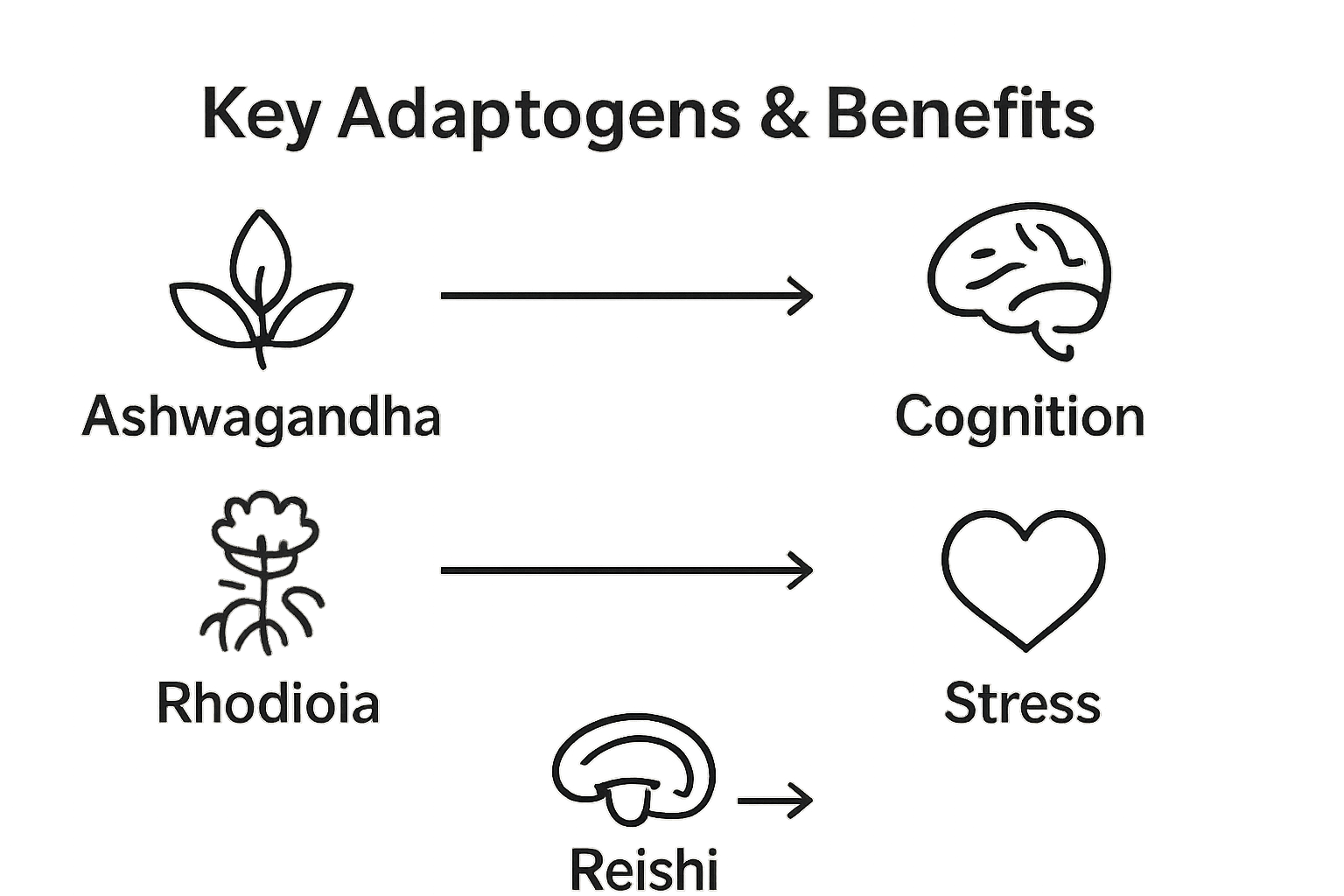
Comprehensive Health Benefits of Select Adaptogens
Beyond stress management, adaptogens offer a wide spectrum of health benefits. Reishi mushrooms, for instance, are celebrated for their immune-modulating properties, while Cordyceps provide potential improvements in athletic performance and cellular energy production.
These natural compounds work synergistically, offering holistic support that goes beyond targeted symptom relief. Learn more about our adaptogen-infused wellness solutions that harness the power of these remarkable natural compounds. The sophisticated interactions between adaptogens and human biological systems demonstrate the intricate potential of plant based wellness strategies.
The Science Behind Adaptogens: What Research Shows
Scientific investigation into adaptogens represents a sophisticated frontier of biological research, exploring how natural compounds interact with complex physiological systems to modulate stress responses and support overall wellness. Modern scientific methodologies are progressively unraveling the intricate mechanisms through which these remarkable substances exert their therapeutic effects.
Molecular Mechanisms of Action
Adaptogens operate through nuanced biochemical pathways, targeting multiple biological systems simultaneously. According to scientific research, these compounds demonstrate remarkable capabilities in regulating stress response mechanisms by:
- Modulating hypothalamic-pituitary-adrenal (HPA) axis function
- Reducing oxidative stress at cellular levels
- Stabilizing stress-induced protein responses
- Enhancing mitochondrial energy production
Bioactive Compound Interactions
The scientific community has identified specific bioactive compounds within adaptogens that contribute to their unique physiological effects. These molecular structures interact with cellular receptors and signaling networks, enabling adaptogens to provide comprehensive support beyond traditional pharmaceutical interventions. The complexity of these interactions suggests that adaptogens work as sophisticated biological modulators rather than simple remedial agents.
Explore our scientifically formulated adaptogen blends that leverage these advanced molecular insights. By understanding the intricate scientific principles underlying adaptogenic compounds, researchers continue to unlock their potential for supporting human health and resilience.
Take Charge of Stress With Proven Adaptogen Solutions
Chronic stress and its exhausting effects can leave you feeling drained, unfocused, and overwhelmed. If you connected with the article’s deep dive into how adaptogens help balance your body, you already understand the power of natural compounds like Reishi, Ashwagandha, and Cordyceps for managing stress and supporting overall wellness. But knowledge alone does not erase those daily pressures or help you take the first real step toward better resilience.

Now is your moment to transform that understanding into actionable results for your health. Our adaptogen-infused mushroom gummies are designed to support stress management, cognitive clarity, and mood enhancement—blending nature’s most effective stress-busters in a crave-worthy format you will actually enjoy. Everything is made from vegan ingredients and crafted to fit seamlessly into your routine. Join countless others who are turning to functional mushroom wellness for relief that is natural, effective, and science-backed. Shop now and give your body the adaptation tools it deserves.
Frequently Asked Questions
What are adaptogens?
Adaptogens are natural compounds, primarily derived from specific herbs and mushrooms, that help the body resist, manage, and adapt to various stressors, promoting overall physiological balance.
How do adaptogens impact stress management?
Adaptogens modulate the body’s stress response by regulating the hypothalamic-pituitary-adrenal (HPA) axis and normalizing hormone production, ultimately helping to reduce the detrimental effects of chronic stress on health.
Can adaptogens help improve mental performance?
Yes, adaptogens can enhance mental performance by reducing fatigue, stabilizing mood, and supporting cognitive function, making them beneficial for individuals dealing with stress-related challenges.
Are there different types of adaptogens and their specific benefits?
Yes, there are various types of adaptogens, such as ashwagandha, which reduces cortisol levels, and Rhodiola rosea, which improves mental performance. Each adaptogen has unique properties that contribute to overall health and resilience.
Recommended
- WUNDER MUSHROOM GUMMIES
- WUNDER ENTHEOGENIC NOOTROPIC BLEND MUSHROOM GUMMIES SOUR APPLE 7.5G
- WUNDER ENTHEOGENIC NOOTROPIC BLEND MUSHROOM GUMMIES STRAWNANA 12G
- WUNDER ENTHEOGENIC NOOTROPIC BLEND MUSHROOM GUMMIES GRAPE 7.5G
