
Uncategorized
Why Mushrooms for Cognitive Support: Understanding Benefits

Aug
Mushrooms are making big waves in the world of brain health right now. Recent studies show that compounds in mushrooms like Lion’s Mane can actually spark the creation of new neural connections and support memory. But here is something most people miss. Regular mushroom eaters even score better on cognitive tests according to national health research. So while mushrooms have a wild reputation for boosting immunity, their untapped brain benefits might be the real story.
Table of Contents
- The Role Of Mushrooms In Cognitive Health
- Why Cognitive Support Matters For Overall Wellbeing
- Mechanisms: How Mushrooms Enhance Cognitive Function
- Key Types Of Mushrooms For Cognitive Enhancement
- Understanding Research And Real-World Applications
Quick Summary
| Takeaway | Explanation |
|---|---|
| Mushrooms support cognitive function. | Certain mushrooms contain bioactive compounds that enhance brain health and mental performance. |
| Lion’s Mane is highly beneficial. | This mushroom boosts nerve growth factor production, potentially improving memory and reducing cognitive decline symptoms. |
| Polysaccharides aid neuroprotection. | Compounds found in mushrooms help protect existing neural networks and promote overall brain cell health. |
| Cognitive health affects quality of life. | Strong cognitive function is vital for effective learning, emotional regulation, and maintaining social connections. |
| Moderation is key in consumption. | Regular, moderate intake of mushrooms may provide cognitive benefits, rather than sporadic or excessive amounts. |
The Role of Mushrooms in Cognitive Health
Mushroomsare emerging as powerful natural allies in supporting cognitive function, offering a fascinating intersection between traditional medicinal practices and modern scientific research. These remarkable fungi contain unique bioactive compounds that interact with our neurological systems in complex and potentially transformative ways.
Neurological Interactions of Medicinal Mushrooms
Medicinal mushrooms like Lion’s Mane contain specialized compounds that directly engage with neural pathways. According to research published in the International Journal of Molecular Sciences, these mushrooms stimulate nerve growth factor (NGF) synthesis, which plays a critical role in neurological health and potential cognitive enhancement.
Key neurological interactions include:
- Promoting neurogenesis (creation of new neural connections)
- Supporting neural plasticity
- Potentially reducing neuroinflammation
Cognitive Support Mechanisms
The cognitive support provided by mushrooms operates through multiple interconnected mechanisms. Specific mushroom species contain polysaccharides and erinacines that demonstrate remarkable neuroprotective properties. These compounds work by:
- Protecting existing neural networks
- Potentially improving memory processing
- Supporting overall brain cell health
While more research is needed, preliminary studies suggest significant potential for mushrooms in cognitive wellness. For those interested in exploring natural approaches to brain health, our guide on mood-enhancing mushrooms offers additional insights into these remarkable fungi and their potential benefits.
Why Cognitive Support Matters for Overall Wellbeing
Cognitive health represents far more than mental performance. It encompasses our ability to think, learn, remember, and process information effectively. Understanding cognitive wellness is crucial because it directly influences our daily experiences, relationships, professional success, and emotional resilience.
Understanding Cognitive Function’s Impact
Cognitive abilities are foundational to human experience. They enable us to navigate complex social interactions, solve problems, make decisions, and maintain emotional balance. According to research exploring cognitive health, impaired cognitive function can significantly reduce quality of life and increase risks of social isolation and mental health challenges.
Key aspects of cognitive wellness include:
- Mental clarity and focus
- Memory retention and recall
- Processing speed and adaptability
- Emotional regulation
- Learning capacity
Long Term Implications of Cognitive Health
Cognitive support is not just about preventing decline but actively promoting brain resilience. Proactive cognitive maintenance can help individuals maintain independence, continue meaningful work, and sustain rich social connections as they age. This approach involves nurturing brain health through nutrition, mental stimulation, physical activity, and targeted supplements.
The interconnected nature of cognitive wellness means that supporting brain function has ripple effects across multiple life domains. For individuals seeking comprehensive strategies for mental wellbeing, our guide on mood-enhancing mushrooms offers additional insights into natural approaches for cognitive support.
Mechanisms: How Mushrooms Enhance Cognitive Function
Mushroomscontain complex bioactive compounds that interact with human neurological systems through sophisticated biochemical pathways. These interactions represent a nuanced approach to supporting brain health, offering potential cognitive enhancement through multiple complementary mechanisms.
Neurochemical Pathway Activation
Medicinal mushrooms operate by stimulating critical neurological processes. According to research exploring mushroom compounds, specific polysaccharides can activate neural progenitor cell proliferation and promote neurogenesis through targeted molecular signaling.
Key neurochemical interactions include:
- Stimulating fibroblast growth factor receptor (FGFR1)
- Activating extracellular signal-regulated kinase (ERK) pathways
- Modulating neural signal transmission
Neuroprotective Compound Mechanisms
Bioactive mushroom compounds demonstrate remarkable capabilities in protecting and potentially regenerating neural networks. These specialized molecules work by reducing neuroinflammation, neutralizing oxidative stress, and supporting overall neural resilience. The compounds interact with brain cells through complex mechanisms that help maintain cognitive function and potentially slow neurological degradation.
Specific protective actions involve:
- Inhibiting harmful protein accumulation
- Supporting mitochondrial health
- Enhancing neural communication networks
For those interested in deeper exploration of cognitive enhancement strategies, our comprehensive guide to nootropic mushrooms offers additional insights into these fascinating natural compounds and their potential brain-supporting properties.
Key Types of Mushrooms for Cognitive Enhancement
Not all mushrooms are created equal when it comes to cognitive support. Certain species stand out for their remarkable neurological benefits, each offering unique compounds that interact with brain function in sophisticated ways.
Lion’s Mane: The Cognitive Powerhouse
Lion’s Mane mushroom has emerged as a premier choice for cognitive enhancement. According to research examining mushroom impacts, this remarkable fungus demonstrates significant potential in improving cognitive function, particularly for individuals experiencing mild cognitive decline.
Key cognitive benefits of Lion’s Mane include:

- Stimulating nerve growth factor production
- Supporting neurogenesis
- Enhancing memory and focus
- Potentially reducing mild cognitive impairment symptoms
Diverse Mushroom Cognitive Profiles
Different mushroom species offer varied approaches to cognitive support. While Lion’s Mane stands out, other mushrooms like Reishi, Cordyceps, and Chaga contribute unique neurological benefits. These mushrooms contain specialized bioactive compounds that interact with neural networks through multiple biochemical pathways.
The table below compares popular medicinal mushrooms and summarizes their unique cognitive support features, helping readers understand the distinct benefits each can provide for brain health.
| Mushroom Type | Key Cognitive Benefits | Primary Bioactive Compounds |
|---|---|---|
| Lion’s Mane | Enhances memory, stimulates nerve growth, supports focus | Erinacines, Hericenones |
| Reishi | Supports stress resilience, aids neurological relaxation | Triterpenes, Polysaccharides |
| Cordyceps | Boosts mental energy, improves neural communication | Cordycepin, Polysaccharides |
| Chaga | Provides antioxidant protection, supports brain cell health | Betulinic acid, Melanin |
Additional cognitive-supporting mushrooms feature:
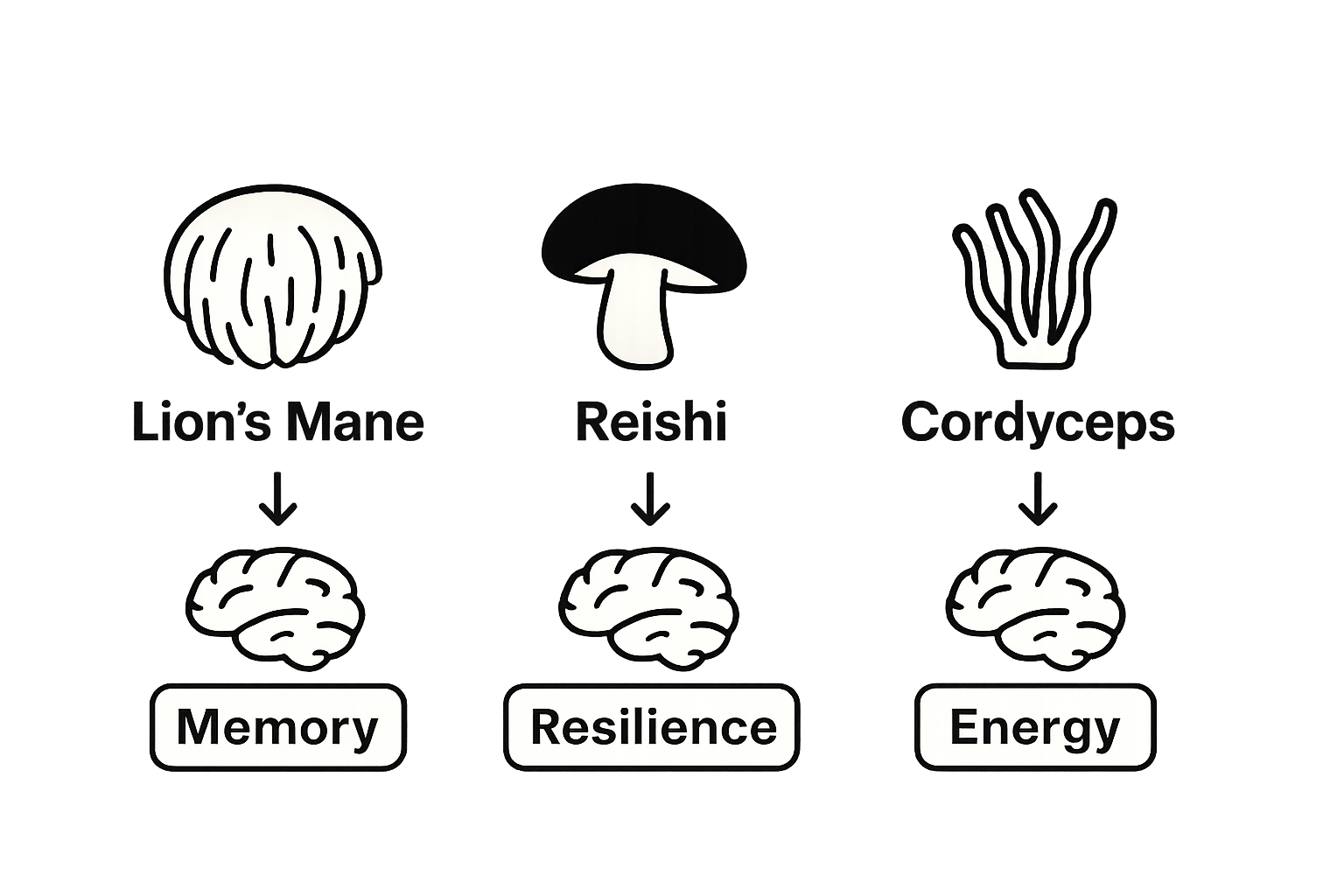
- Reishi: Supports stress reduction and neurological resilience
- Cordyceps: Enhances mental energy and neural communication
- Chaga: Provides antioxidant protection for brain cells
For enthusiasts seeking a deeper understanding of how these remarkable fungi can support mental performance, our comprehensive mood enhancement guide provides additional insights into the fascinating world of cognitive-supporting mushrooms.
Understanding Research and Real-World Applications
The journey of mushrooms from traditional medicine to modern cognitive support represents a fascinating intersection of scientific research and practical wellness strategies. Emerging evidence suggests that these remarkable fungi offer more than historical anecdotes, presenting tangible potential for cognitive enhancement.
Scientific Validation of Cognitive Benefits
Recent scientific investigations have begun systematically exploring mushroom compounds and their neurological impacts. According to comprehensive population research, studies analyzing national health data demonstrate significant correlations between mushroom consumption and cognitive performance, particularly among older adults.
Key research findings highlight:
- Positive associations between regular mushroom intake and cognitive test performance
- Potential protective effects against age-related cognitive decline
- Measurable improvements in memory and processing speed
Practical Implementation and Considerations
Translating research into practical wellness requires understanding both the potential and limitations of mushroom supplementation. While promising, cognitive enhancement through mushrooms is not a universal solution but a complementary approach to brain health. Consistent, moderate consumption appears more beneficial than sporadic or excessive intake.
Practical application strategies include:
- Integrating diverse mushroom varieties into diet
- Consulting healthcare professionals before starting supplements
- Maintaining realistic expectations about cognitive improvements
For those interested in exploring comprehensive strategies for mental wellness, our guide to nootropic mushrooms offers deeper insights into practical mushroom supplementation approaches.
Ready to Experience Real Cognitive Support from Functional Mushrooms?
The challenges discussed in this article highlight how important it is to find natural, reliable options for better focus, memory, and overall mental clarity. If you are searching for a way to support your brain health with convenience and ease, you do not have to look further. Mushrooms are packed with bioactive compounds that work to protect your neural pathways and promote lasting cognitive wellness. Now, you can access those benefits in delicious and practical forms right at home through mushroom gummies and grow kits.

Start your wellness journey with our expertly crafted mushroom-infused gummies and discover how easy it can be to unlock your full mental potential. Explore our selection today by visiting our main shop, or browse our Uncategorized product collection for a variety of options. Take control of your cognitive health now and experience the difference that science-backed, plant-based solutions can make for your focus, creativity, and mood.
Frequently Asked Questions
What are the cognitive benefits of Lion’s Mane mushrooms?
Lion’s Mane mushrooms are known for their ability to stimulate nerve growth factor production, support neurogenesis, enhance memory and focus, and potentially reduce symptoms of mild cognitive impairment.
How do mushrooms enhance cognitive function?
Mushrooms contain bioactive compounds like polysaccharides and erinacines that promote neurogenesis, protect neural networks, and improve overall brain cell health, working through various neurochemical pathways to enhance cognitive function.
Can mushroom supplementation prevent cognitive decline?
While mushrooms may not entirely prevent cognitive decline, they can actively support brain health and promote resilience. Regular consumption of certain mushrooms may help maintain cognitive abilities as one ages.
Are there any side effects associated with consuming medicinal mushrooms for cognitive support?
Generally, medicinal mushrooms are considered safe for most individuals when consumed in moderate amounts. However, it’s important to consult a healthcare professional before starting any new supplement, especially for those with underlying health conditions or allergies.
Recommended
- 7 Mushrooms for Mood Enhancement You Need to Try
- Understanding the Role of Mushrooms in Gut Health
- What is Nootropic Mushrooms? Understanding Their Benefits
- What is Mushroom Bioavailability? A Comprehensive Guide
