
Uncategorized
What is Mushroom Bioavailability? A Comprehensive Guide

Aug
Mushrooms are packed with powerful nutrients, but many people miss out on their real benefits without even realizing it. Most assume that eating mushrooms means your body automatically soaks up all those good compounds. The truth is that processing methods can change mushroom bioavailability by up to 60%, and unlocking those health-boosting molecules is a lot trickier than it sounds.
Table of Contents
- Understanding Mushroom Bioavailability: Definition And Importance
- The Science Behind Bioavailability: How Our Body Absorbs Mushrooms
- Factors Influencing Mushroom Bioavailability: What Affects Absorption?
- The Role Of Processing And Preparation In Enhancing Bioavailability
- Practical Implications: How Bioavailability Affects Wellness And Health
Quick Summary
| Takeaway | Explanation |
|---|---|
| Understanding bioavailability is crucial. | Bioavailability determines how much of mushroom compounds enter the bloodstream for use in the body. |
| Processing methods impact nutrient absorption. | Different extraction techniques, like hot water or alcohol extraction, significantly affect how well nutrients are released. |
| Mushroom species affect bioactive compound release. | The structural differences in various mushroom species can influence how easily their nutrients can be absorbed. |
| Prepare mushrooms strategically for better health benefits. | Cooking or processing mushrooms properly allows the body to access more nutrients, enhancing their therapeutic effects. |
| Bioavailability relates to health outcomes. | High bioavailability of mushroom compounds correlates with improved immune function, cognitive health, and metabolic efficiency. |
Understanding Mushroom Bioavailability: Definition and Importance
Mushroom bioavailability represents a critical concept in understanding how our bodies process and absorb the remarkable compounds found in mushrooms. At its core, bioavailability describes the proportion of active ingredients that enter the bloodstream and become available for physiological use. Not all nutrients consumed are equally absorbed, and mushrooms present unique challenges and opportunities in this biological process.
The Science Behind Mushroom Absorption
Understanding mushroom bioavailability requires examining the complex structural composition of fungal cell walls. Mushrooms contain potent bioactive compounds like polysaccharides, beta glucans, and triterpenes that offer significant health benefits. However, these compounds are often trapped within tough cellular structures that make direct absorption challenging. Research from the National Institutes of Health indicates that processing methods significantly impact how effectively these nutrients can be released and utilized by the human body.
Factors Influencing Mushroom Nutrient Availability
Several key factors determine mushroom bioavailability and ultimately impact their therapeutic potential. These include:
- Extraction Method: Different techniques like hot water extraction, alcohol extraction, or dual extraction can dramatically alter nutrient accessibility
- Mushroom Species: Some mushrooms naturally have more permeable cell walls than others
- Preparation Technique: Raw, dried, powdered, or concentrated forms have varying absorption rates
To help you dive deeper into understanding functional mushroom terminology, check out our comprehensive guide on mushroom wellness concepts.
By comprehending bioavailability, consumers can make informed decisions about mushroom supplements and optimize their potential health benefits. The goal is not just consuming mushrooms but ensuring the body can effectively utilize their incredible nutritional profile.
The Science Behind Bioavailability: How Our Body Absorbs Mushrooms
The journey of mushroom nutrients from consumption to cellular utilization involves a complex physiological process that determines their ultimate health impact. Understanding this intricate pathway reveals why not all mushroom compounds are equally absorbed and how strategic preparation can maximize their potential therapeutic benefits.
Cellular Absorption Mechanisms
Mushroomʼs bioactive compounds must navigate a challenging biological landscape to reach their target destinations. The human digestive system acts as a sophisticated filter, breaking down complex molecular structures and determining which nutrients pass through the intestinal wall into the bloodstream. Beta glucans, powerful immunomodulating compounds found in mushrooms, require specific enzymatic processes to be effectively released and absorbed.
Research from the Journal of Food Science indicates that processing methods dramatically influence nutrient bioaccessibility. Different extraction techniques can significantly enhance or diminish the bodyʼs ability to utilize mushroom compounds.
Key Factors in Nutrient Transformation
Several critical factors influence how mushroom nutrients are transformed and absorbed:
- Molecular Size: Smaller molecular compounds are more easily transported across intestinal membranes
- Solubility: Water soluble compounds have higher absorption rates compared to fat soluble alternatives
- Interaction with Digestive Enzymes: The bodyʼs enzymatic environment plays a crucial role in breaking down complex mushroom structures
Learn more about how mushrooms support gut health and understand the intricate relationship between digestive processes and nutrient absorption.
Comprehending these scientific mechanisms empowers individuals to make informed choices about mushroom supplementation, ensuring they maximize the potential health benefits of these remarkable functional foods.
Factors Influencing Mushroom Bioavailability: What Affects Absorption?
Bioavailability is not a simple one dimensional process but a complex interplay of multiple physiological and external factors. Understanding these intricate variables helps optimize how our bodies extract and utilize the potent nutritional compounds found in mushrooms.
Processing and Preparation Methods
The way mushrooms are processed dramatically impacts their nutrient absorption potential. Raw mushrooms contain tough cellular structures that can limit nutrient release, while strategic processing techniques can enhance bioavailability. Research from the Journal of Agricultural and Food Chemistry demonstrates that different extraction methods like hot water extraction, alcohol extraction, and dual extraction can significantly alter the accessibility of bioactive compounds.
Specific processing approaches can break down complex molecular structures, making nutrients more readily available for the human body to absorb. Heat treatment, for instance, can help disrupt mushroom cell walls, releasing trapped nutrients and increasing their potential therapeutic impact.
To help visualize how different extraction and preparation methods affect mushroom bioavailability, the following table compares common techniques discussed in the article.
| Processing Method | Key Characteristics | Impact on Bioavailability |
|---|---|---|
| Raw (Unprocessed) | Tough cellular structure remains intact | Low – nutrients difficult to access |
| Hot Water Extraction | Uses heat to release water-soluble compounds | Moderate to High – enhances beta glucan release |
| Alcohol Extraction | Dissolves fat-soluble compounds | Moderate – targets triterpenes |
| Dual Extraction | Combines water and alcohol methods | High – maximizes overall nutrient access |
| Powdering/Drying | Increases surface area, no cell wall disruption | Low to Moderate – may increase slightly but not optimal |
Physiological and Dietary Interactions
Bioavailability is not solely determined by mushroom preparation but also by complex interactions within the human body. Key factors include:
- Digestive Enzyme Activity: Individual variations in enzymatic processes can affect nutrient breakdown
- Gut Microbiome Composition: The unique bacterial environment influences nutrient absorption
- Concurrent Food Intake: Consuming mushrooms with certain foods can enhance or inhibit nutrient uptake
Explore our comprehensive guide on mushroom gut health insights to understand how these intricate biological mechanisms work.
By recognizing these multifaceted factors, consumers can make more informed decisions about mushroom consumption, ensuring they maximize the potential health benefits of these remarkable functional foods.
This table summarizes the main factors from the article that influence how well mushroom compounds are absorbed and utilized in the body.
| Factor | Description | Example Impact |
|---|---|---|
| Extraction Method | Technique used to process mushrooms | Hot water improves beta glucan availability |
| Mushroom Species | Species-specific cell wall structure | Some species are naturally more bioavailable |
| Preparation Technique | How the mushroom is cooked or processed | Cooking can enhance absorption |
| Molecular Size of Compounds | Size affects how easily nutrients cross membranes | Smaller molecules absorb more readily |
| Solubility of Nutrients | Water- vs fat-soluble impacts absorption rates | Water-soluble compounds absorb faster |
| Digestive Enzyme Activity | Individual enzymatic efficiency | Can enhance or limit nutrient liberation |
| Gut Microbiome Composition | Bacterial environment of the digestive tract | Supports or hinders absorption |
| Concurrent Food Intake | What else is eaten with mushrooms | Some foods can boost or inhibit absorption |
The Role of Processing and Preparation in Enhancing Bioavailability
Transforming raw mushrooms into potent nutritional supplements requires sophisticated processing techniques that unlock their hidden potential. The journey from whole mushroom to bioactive compound involves strategic methods designed to maximize nutrient accessibility and absorption.
Extraction Techniques and Their Impact
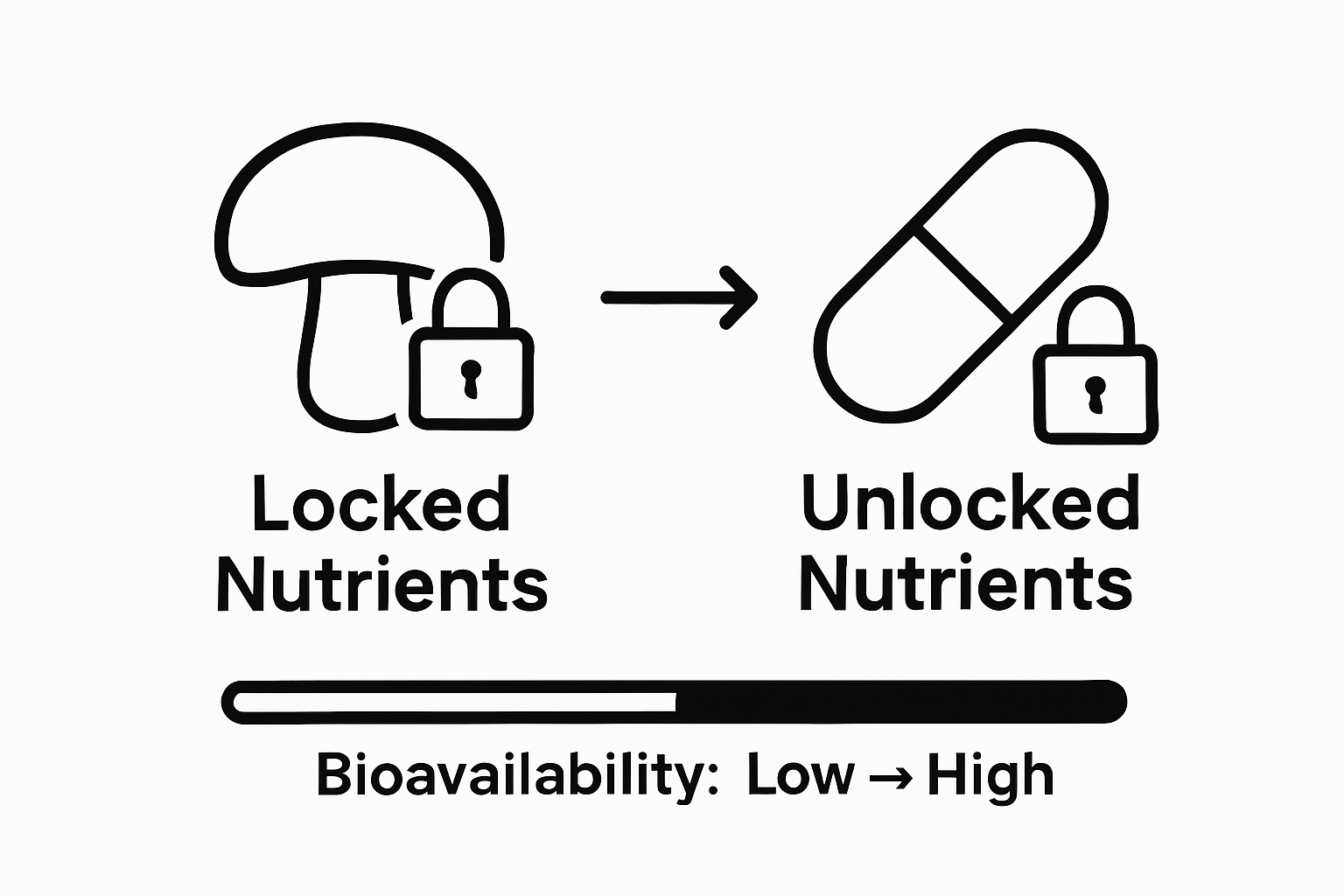
Extraction methods play a pivotal role in breaking down complex cellular structures and releasing bioactive compounds. Research from food science experts reveals that different processing techniques can dramatically alter the bioaccessibility of essential nutrients. Hot water extraction, alcohol extraction, and dual extraction each offer unique advantages in liberating mushroom compounds from their cellular matrices.
Heat treatment, for instance, serves as a powerful tool in dismantling tough mushroom cell walls. By applying controlled temperatures, processors can effectively break down chitin membranes that typically prevent easy nutrient absorption. This process transforms raw mushrooms from nutritionally locked structures into bioavailable nutritional powerhouses.
Critical Processing Considerations
Not all processing methods are created equal. Crucial factors that influence nutrient liberation include:
- Temperature Control: Precise heating techniques prevent nutrient degradation
- Extraction Duration: Optimal time windows maximize compound release
- Solvent Selection: Different solvents extract varying types of bioactive compounds
Advanced processing techniques require a delicate balance between preserving nutritional integrity and enhancing bioavailability. Discover more about mushroom wellness strategies to understand the intricate science behind these transformative methods.
Ultimately, the goal of mushroom processing is to create supplements that deliver maximum nutritional benefit, transforming complex fungal structures into easily absorbed, potent health-enhancing compounds.
Practical Implications: How Bioavailability Affects Wellness and Health
Bioavailability transforms mushroom consumption from a passive dietary choice to an active wellness strategy. Understanding how our bodies process and utilize mushroom compounds determines the real world health benefits we can potentially experience.
Targeted Health Outcomes
Nutrient absorption is not merely about consuming compounds but ensuring they reach cellular levels where genuine physiological transformation occurs. Research published in the International Journal of Molecular Sciences demonstrates that enhanced bioavailability directly correlates with improved health markers, including immune system function, cognitive performance, and metabolic efficiency.
The difference between ingesting mushroom compounds and actually benefiting from them lies in bioavailability. Poorly absorbed nutrients essentially become expensive waste, while highly bioavailable compounds can trigger meaningful cellular responses that support overall wellness.
Critical Health Impact Areas
Mushroomʼs bioavailable compounds potentially influence multiple health domains:
- Immune System Modulation: Enhanced absorption of beta glucans can optimize immune cell communication
- Cognitive Function: Bioactive compounds that successfully cross the blood brain barrier support neurological health
- Metabolic Regulation: Efficiently absorbed nutrients can help balance inflammatory responses and support metabolic processes
Explore our comprehensive guide on adaptogenic health strategies to understand how targeted nutrient absorption can transform wellness approaches.
Ultimately, bioavailability represents the critical bridge between consuming mushroom supplements and experiencing their genuine therapeutic potential. Consumers who understand and prioritize absorption can make more informed choices about their nutritional investments.
Experience Real Mushroom Bioavailability with WUNDER GUMMIES
You have just learned how bioavailability is vital for unlocking the health potential of mushrooms. If youʼve struggled with poorly absorbed supplements or felt frustration about not seeing results from your wellness routine, you are not alone. Maximizing mushroom nutrient absorption is essential for real benefits like boosted immunity, sharper focus, and genuine mood support as highlighted in our detailed guide to mushroom bioavailability.

Ready to experience the true power of medicinal mushrooms? Visit WUNDER GUMMIES where every product is designed to optimize nutrient absorption and enhance your wellness journey naturally. Discover functional mushroom gummies made with advanced processing, delicious flavors, and clean, vegan ingredients. Start optimizing your health today with bioavailable solutions you can trust. Shop now for functional mushrooms that make a real difference.
Frequently Asked Questions
What is mushroom bioavailability?
Mushroom bioavailability refers to the proportion of active ingredients in mushrooms that is absorbed into the bloodstream and utilized by the body for physiological functions.
Why is bioavailability important for mushroom supplements?
Bioavailability is crucial because it determines how effectively the beneficial compounds in mushrooms, such as beta glucans and polysaccharides, are absorbed and utilized by the body, impacting overall health benefits.
How do different extraction methods affect mushroom bioavailability?
Different extraction methods, like hot water or alcohol extraction, can significantly alter nutrient accessibility by breaking down tough cell walls in mushrooms, thus enhancing the bioavailability of bioactive compounds.
What factors can influence the absorption of nutrients from mushrooms?
Factors that influence the absorption of nutrients from mushrooms include the molecular size of compounds, their solubility, the specific mushroom species, preparation methods, and individual variations in digestive enzyme activity.
Recommended
- Understanding the Role of Mushrooms in Gut Health
- 7 Mushrooms for Mood Enhancement You Need to Try
- Understanding Functional Mushroom Terminology for Wellness
- What is Nootropic Mushrooms? Understanding Their Benefits
