
Uncategorized
Understanding What Are Active Compounds in Mushrooms

Sep
Mushrooms are quietly packed with compounds that go far beyond simple nutrition. Some of these unique molecules can interact with your body on a cellular level and even help protect against genetic damage. But that is just scratching the surface. Studies reveal mushroom compounds can inhibit cancer cell growth, modulate immune function, and support neurological health all at once. What scientists are finding is mushrooms might just be the most advanced natural wellness agents sitting on your dinner table.
Table of Contents
- Defining Active Compounds In Mushrooms
- The Importance Of Active Compounds For Health
- How Active Compounds Interact With The Body
- Common Types Of Active Compounds In Mushrooms
- Real-World Applications And Uses Of Mushroom Compounds
Quick Summary
| Takeaway | Explanation |
|---|---|
| Mushrooms contain diverse active compounds | Various chemical substances in mushrooms have significant health benefits beyond basic nutrition. |
| Polysaccharides enhance immune response | These complex carbohydrates play a crucial role in modulating immune system functions. |
| Mushroom compounds reduce oxidative stress | Active compounds in mushrooms help neutralize free radicals, protecting cellular health. |
| Multiple health benefits support holistic wellness | Active compounds contribute to neurological health, cardiovascular function, and inflammation regulation. |
| Mushroom compounds offer therapeutic potential | These compounds may support treatments for cancer, metabolic disorders, and chronic inflammation. |
Defining Active Compounds in Mushrooms
Active compounds in mushrooms represent complex biochemical substances that deliver significant biological benefits beyond basic nutritional value. These specialized molecules interact dynamically with human physiological systems, producing targeted wellness responses. Understanding the role of compounds in mushrooms reveals their remarkable potential for supporting health and performance.
Chemical Classification of Mushroom Compounds
Mushrooms contain multiple categories of active compounds, each with unique characteristics and potential therapeutic applications. According to research published in PubMed, these primary compound categories include
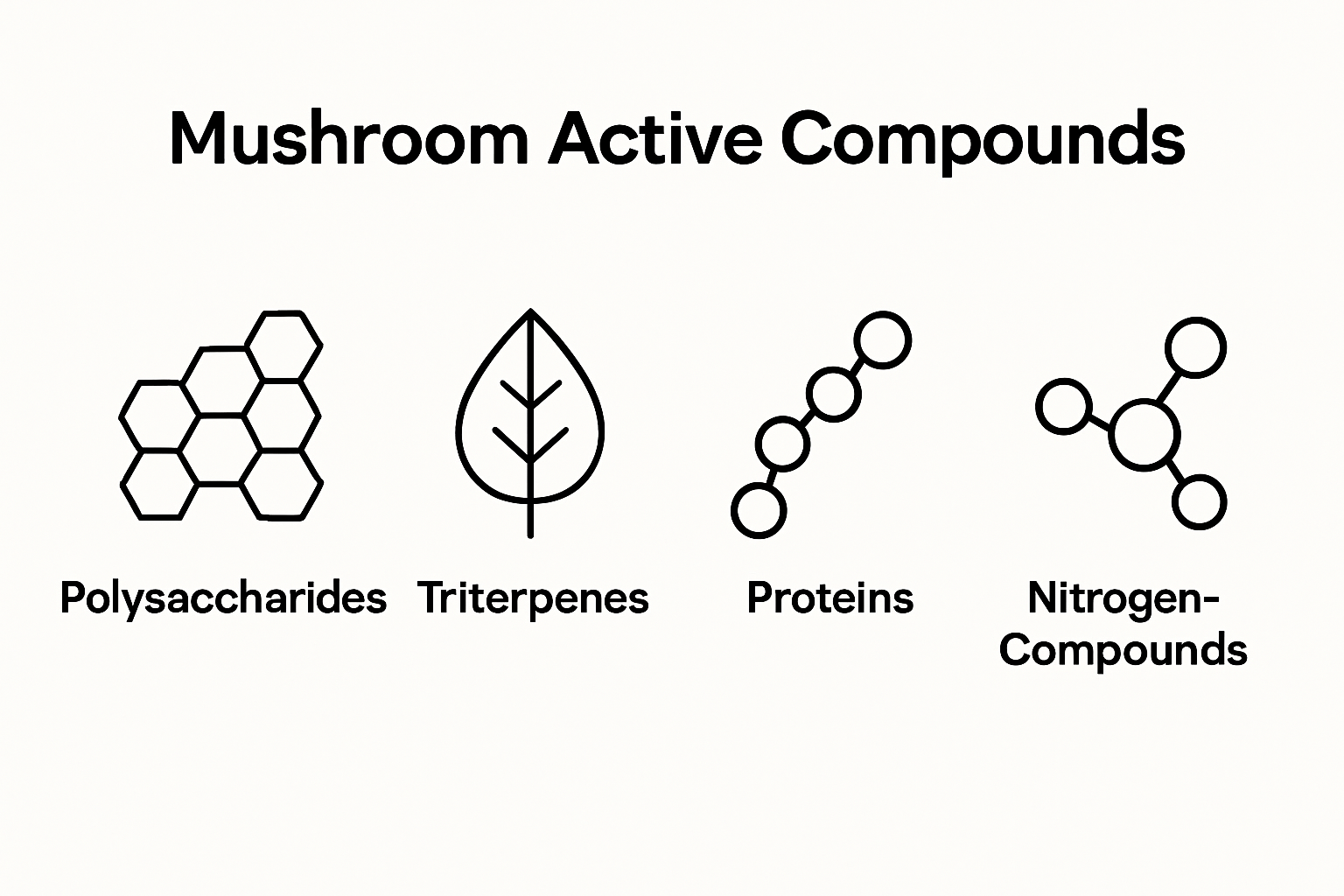 :
:
- Polysaccharides: Complex carbohydrate structures known for immune modulation
- Triterpenes: Organic molecules with potential anti-inflammatory properties
- Proteins: Bioactive peptides with potential signaling and regulatory functions
- Nitrogen-containing compounds: Molecular structures with potential neurological interactions
Biological Mechanisms of Active Compounds
The biological mechanisms of mushroom active compounds involve intricate interactions with cellular receptors, enzyme systems, and metabolic pathways. These compounds can trigger specific physiological responses by:
- Modulating immune system function
- Supporting cellular repair processes
- Reducing oxidative stress
- Enhancing neurotransmitter activity
These sophisticated molecular interactions demonstrate why mushrooms are more than simple food sources. They represent complex biological systems capable of delivering targeted wellness support through their unique chemical compositions.
The Importance of Active Compounds for Health
Active compounds in mushrooms represent a groundbreaking frontier in natural wellness, offering profound potential for supporting human health through sophisticated biochemical interactions. Why full-spectrum mushrooms matter for wellness provides deeper insights into their remarkable therapeutic potential.
Comprehensive Health Protection Mechanisms
According to research published in PubMed, mushroom active compounds deliver multifaceted health benefits through intricate biological protection strategies. These compounds work comprehensively to defend and optimize human physiological systems:
- Cellular DNA Protection: Decreasing potential genetic damage
- Immune System Enhancement: Stimulating natural defensive capabilities
- Free Radical Neutralization: Reducing oxidative stress
- Cancer Cell Inhibition: Supporting potential anti-tumor mechanisms
Targeted Wellness Performance
Mushroom active compounds function as sophisticated molecular agents that interact precisely with human biological systems. Their targeted approach allows for nuanced wellness support across multiple physiological domains:

- Supporting neurological function
- Regulating metabolic processes
- Promoting cardiovascular health
- Balancing inflammatory responses
By delivering complex biochemical signals, these compounds transform traditional nutritional understanding. They represent not just food sources, but intelligent biological interventions capable of supporting holistic human wellness through advanced molecular interactions.
This table summarizes the primary mechanisms through which mushroom active compounds support health, mapping out their roles and protective benefits.
| Mechanism | Role in the Body | Health Benefit Provided |
|---|---|---|
| Cellular DNA Protection | Defends against genetic damage | Maintains genetic stability, reduces mutation risk |
| Immune System Enhancement | Boosts defensive physiological responses | Increases resistance to pathogens and illness |
| Free Radical Neutralization | Counters oxidative molecules | Slows cellular aging, supports overall cell health |
| Cancer Cell Inhibition | Limits abnormal cell growth | Potentially reduces cancer risk |
| Neurological Support | Encourages neurotransmitter activity | Supports cognitive function, mental clarity |
| Metabolic Regulation | Influences energy production | Helps manage metabolic disorders like diabetes |
| Inflammation Regulation | Balances inflammatory responses | Reduces risk of chronic inflammation-related disease |
How Active Compounds Interact with the Body
Active compounds in mushrooms engage in sophisticated biochemical interactions that transform traditional understanding of nutritional interventions. Understanding the benefits of mushroom blends reveals the intricate ways these natural molecules communicate with human physiological systems.
Cellular Receptor Activation Mechanisms
According to research from the International Journal of Molecular Sciences, mushroom active compounds like beta-glucans interact directly with immune cell receptors through precise molecular signaling. These interactions trigger complex physiological responses that can modulate:
- Immune System Function: Enhancing cellular defensive capabilities
- Inflammatory Responses: Regulating systemic inflammation
- Cellular Communication: Supporting intercellular messaging pathways
- Metabolic Regulation: Influencing energy production and metabolism
Biochemical Signaling Pathways
Mushroom compounds operate through intricate biochemical networks, functioning as intelligent molecular messengers. Their interaction involves multiple sophisticated mechanisms:
- Binding to specific cellular receptors
- Triggering cascading biological responses
- Modulating enzyme activity
- Supporting neurological communication channels
These complex interactions demonstrate how active compounds transcend traditional nutritional concepts. They represent advanced biological interventions capable of supporting holistic wellness through precise molecular communication and systemic optimization.
Common Types of Active Compounds in Mushrooms
Mushrooms are biochemical powerhouses containing diverse molecular structures that deliver remarkable health benefits. Understanding types of edible mushrooms provides critical context for comprehending their complex active compound profiles.
Primary Molecular Classifications
According to scientific research published in molecular biology journals, mushrooms contain several fundamental categories of active compounds with unique biological characteristics:
- Polysaccharides: Complex carbohydrate structures with immunomodulatory properties
- Terpenoids: Organic molecules supporting cellular communication
- Proteins and Peptides: Bioactive compounds facilitating metabolic interactions
- Phenolic Compounds: Molecular structures with potent antioxidant capabilities
Functional Compound Characteristics
Each active compound category performs specialized functions within human biological systems. Their intricate interactions demonstrate sophisticated molecular intelligence:
The following table organizes the main categories of active compounds found in mushrooms alongside their primary features and potential health impacts.
| Compound Category | Key Features | Principal Health Effects |
|---|---|---|
| Polysaccharides | Complex carbohydrates, immune modulators | Enhance immune response, support cellular repair |
| Triterpenes/Terpenoids | Organic molecules, anti-inflammatory action | Reduce inflammation, support cellular communication |
| Proteins & Peptides | Bioactive peptides, signaling functions | Regulate metabolism, facilitate enzyme activity |
| Nitrogen-containing | Diverse structures, neurological activity | Influence nervous system, support neurotransmitter health |
| Phenolic Compounds | Antioxidant-rich molecules | Neutralize free radicals, protect against oxidative stress |
- Stimulating immune system responses
- Neutralizing harmful free radicals
- Supporting cellular repair mechanisms
- Regulating inflammatory processes
These sophisticated molecular agents transform mushrooms from simple nutritional sources into advanced biological interventions capable of supporting comprehensive human wellness through precise, targeted molecular communication.
Real-World Applications and Uses of Mushroom Compounds
Mushroom compounds represent a revolutionary frontier in wellness, medicine, and biotechnology, offering sophisticated solutions across multiple disciplines. Understanding mushroom terminology provides essential context for exploring their diverse practical applications.
Medical and Therapeutic Interventions
According to comprehensive research in biomedical sciences, mushroom compounds demonstrate remarkable potential in advanced therapeutic contexts:
- Cancer Treatment Support: Utilizing compounds with potential anti-tumor properties
- Immune System Modulation: Enhancing natural defensive mechanisms
- Diabetes Management: Supporting metabolic regulation strategies
- Chronic Inflammation Reduction: Targeting systemic inflammatory responses
Interdisciplinary Scientific Applications
Beyond traditional medical interventions, mushroom compounds are transforming multiple scientific domains through innovative applications:
- Developing advanced pharmaceutical formulations
- Creating sustainable biotechnology solutions
- Exploring agricultural and environmental remediation techniques
- Designing novel antioxidant and metabolic intervention strategies
These sophisticated molecular agents transcend conventional nutritional understanding, representing intelligent biological technologies capable of addressing complex health and environmental challenges through precise, targeted molecular interactions.
Experience the Power of Mushroom Active Compounds—In Every Gummy
You have just uncovered the science behind active compounds in mushrooms and their life-changing benefits. If you are looking to harness these powerful natural agents for your own health, it can be hard to know where to start. Complex concepts like immune system support, targeted performance, and holistic wellness might seem out of reach in everyday routines. This is where the right products make all the difference.
Explore our full selection of expertly crafted mushroom-infused gummies and grow kits that bring these sophisticated compounds directly into your wellness journey. Each product is developed to help you focus, relax, and elevate your mood, while staying true to natural, vegan ingredients you can trust. 
Let your curiosity turn into action. Visit WUNDER Gummies for detailed listings and transparent ingredient information. Make your next move toward holistic health today and feel the functional difference mushrooms can make.
Frequently Asked Questions
What are active compounds in mushrooms?
Active compounds in mushrooms are complex biochemical substances that provide significant biological benefits, interacting with human physiological systems to support health and wellness.
What types of active compounds are found in mushrooms?
Mushrooms contain various active compounds, including polysaccharides, triterpenes, proteins, and nitrogen-containing compounds, each with unique characteristics and potential therapeutic applications.
How do mushroom active compounds interact with the body?
Mushroom active compounds engage with cellular receptors and metabolic pathways, triggering physiological responses that can enhance immune function, regulate inflammation, and support neurological health.
What health benefits do mushroom active compounds offer?
Active compounds in mushrooms are known to provide health benefits such as immune system enhancement, free radical neutralization, support for cellular repair, and potential cancer cell inhibition.
Recommended
- Understanding the Role of Compounds in Mushrooms – WUNDER GUMMIES
- Understanding Mushroom Terminology Explained for Health Insights – WUNDER GUMMIES
- Why Full-Spectrum Mushrooms Matter for Wellness – WUNDER GUMMIES
- What is Mushroom Bioavailability? A Comprehensive Guide – WUNDER GUMMIES
