
Uncategorized
Understanding the Role of Compounds in Mushrooms

Sep
Mushrooms are more than just a tasty addition to your dinner plate and they are treasure chests full of powerful compounds. Scientists have found that beta-glucans, a type of polysaccharide in mushrooms, are proven immune boosters that stimulate key immune cells. That might sound impressive and still most people only think of mushrooms as a side dish or soup ingredient. Turns out these humble fungi hold some of the most complex natural chemistry in the whole plant kingdom and their true health potential is only just being uncovered.
Table of Contents
- What Are The Key Compounds Found In Mushrooms?
- Why Are These Compounds Important For Health And Wellness?
- How Do Compounds In Mushrooms Affect The Body?
- What Are The Potential Benefits Of Mushroom Compounds?
- How Can These Compounds Be Used In Everyday Wellness?
Quick Summary
| Takeaway | Explanation |
|---|---|
| Mushrooms enhance immune function | Polysaccharides, particularly beta-glucans, activate immune cells to improve body defense mechanisms. |
| Mushrooms provide antioxidant protection | Terpenoids and phenolic compounds neutralize free radicals, reducing oxidative stress and inflammation. |
| Mushroom compounds support cognitive health | Specific compounds may enhance cognitive function and protect against age-related decline. |
| Daily mushroom consumption is beneficial | Whole mushrooms, powders, and extracts offer convenient ways to integrate health benefits into daily diets. |
| Target health goals with specific mushrooms | Different mushroom compounds can address various wellness needs, such as stress management and energy regulation. |
What are the Key Compounds Found in Mushrooms?
Mushrooms are complex organisms packed with an extraordinary array of bioactive compounds that contribute significantly to their nutritional and medicinal properties. These natural chemical structures play crucial roles in mushroom biology and offer remarkable potential for human health.
The table below summarizes key bioactive compound categories found in mushrooms and outlines their primary health functions and effects.
| Compound Category | Example Compounds | Main Health Roles |
|---|---|---|
| Polysaccharides | Beta-glucans | Immune modulation, cellular health |
| Terpenoids | Lanostanoids, triterpenes | Antioxidant, anti-inflammatory |
| Phenolic Compounds | Phenolic acids, flavonoids | Antioxidant protection, cellular defense |
| Amino Acids | Ergothioneine | Neuroprotection, metabolic regulation |
| Vitamins & Minerals | Vitamin D, selenium | Support overall metabolism and systemic wellness |
| Learn more about mushroom compounds in our comprehensive guide. |
Polysaccharides: Nature’s Powerful Immune Modulators
Polysaccharides represent one of the most significant compound groups in mushrooms, with beta-glucans standing out as particularly important. According to research from the National Center for Biotechnology Information, these complex carbohydrates demonstrate extraordinary immunomodulatory capabilities. Beta-glucans interact with immune cells, potentially enhancing the body’s natural defense mechanisms and promoting overall cellular health.
Terpenoids and Phenolic Compounds: Antioxidant Powerhouses
Terpenoids and phenolic compounds are another critical category of mushroom compounds. These molecules provide potent antioxidant properties that help protect cells from oxidative stress and potential damage.
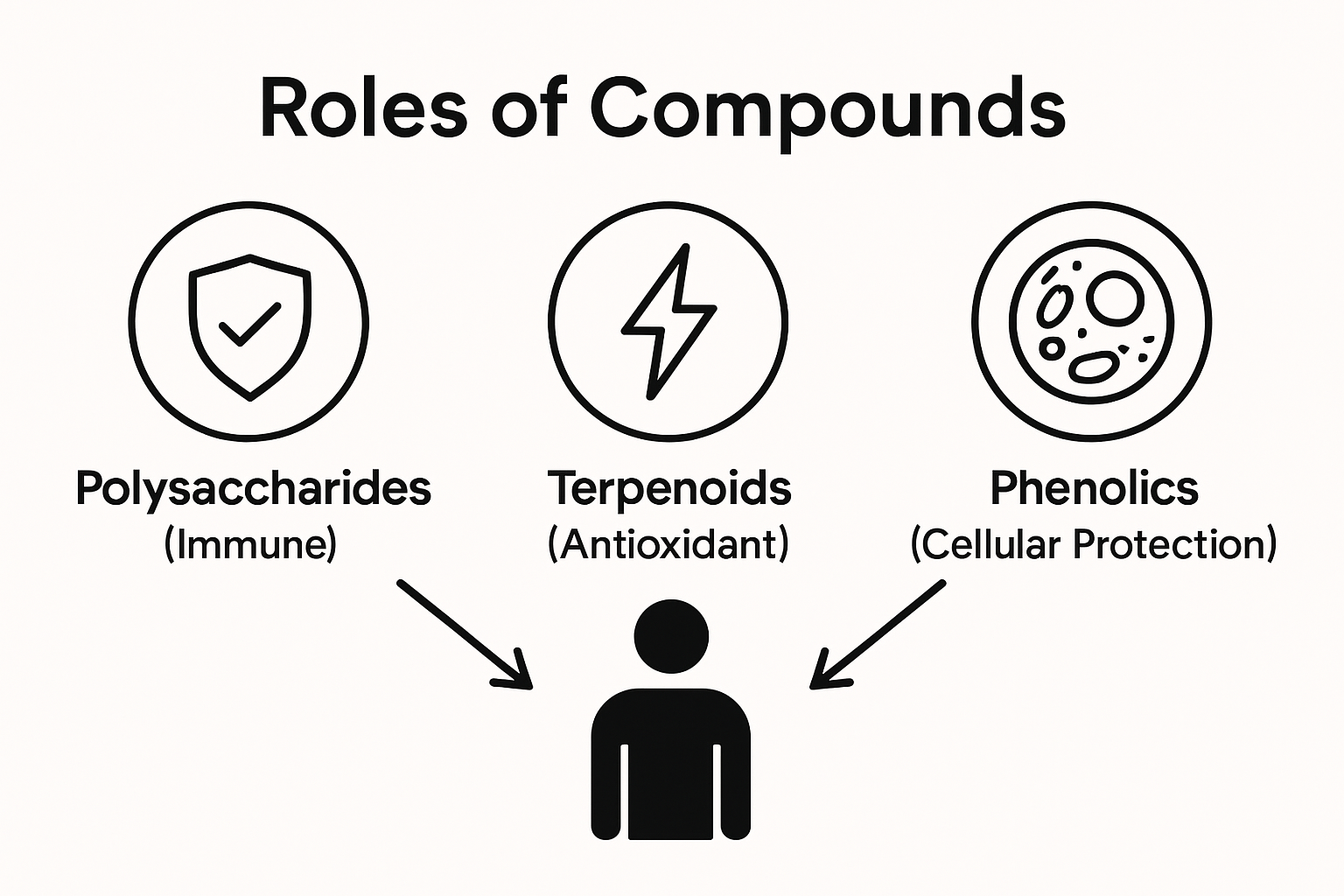 They contribute to the mushroom’s ability to neutralize harmful free radicals, which can support overall cellular integrity and potentially reduce inflammation.
The comprehensive profile of compounds in mushrooms makes them far more than simple food ingredients. These natural chemical structures represent a sophisticated network of biological molecules that interact with human physiology in complex and potentially beneficial ways. From supporting immune function to providing antioxidant protection, mushroom compounds continue to fascinate researchers and health enthusiasts alike.
Why are These Compounds Important for Health and Wellness?
Mushroom compounds are not just scientific curiosities but powerful natural agents with profound implications for human health. Explore how functional mushrooms support wellness through their intricate biochemical compositions.
Immune System Enhancement
The bioactive compounds in mushrooms, particularly beta-glucans, play a critical role in modulating immune function. According to research from Harvard School of Public Health, these compounds interact with immune cells, potentially stimulating their activity and improving the body’s natural defense mechanisms. By supporting immune system responsiveness, mushroom compounds help the body more effectively recognize and combat potential health threats.
Antioxidant and Anti-Inflammatory Protection
Mushroom compounds offer remarkable protection against oxidative stress and chronic inflammation. Terpenoids and phenolic compounds act as powerful antioxidants, neutralizing harmful free radicals that can damage cellular structures. These compounds help mitigate inflammation, which is increasingly recognized as a root cause of numerous chronic health conditions.
The following table compares the major health benefits of the three core mushroom compound groups described in the article.
| Compound Group | Immune Support | Antioxidant Protection | Cognitive/Neurological Benefits | Anti-Inflammatory Effect |
|---|---|---|---|---|
| Beta-glucans | Yes | Yes | Some | Yes |
| Terpenoids | Some | Yes | Limited | Yes |
| Phenolic Compounds | Limited | Yes | Limited | Yes |
| Their ability to reduce oxidative damage suggests potential benefits in: |
- Supporting cardiovascular health
- Protecting neural function
- Potentially slowing aging processes
- Reducing risk of chronic disease development
By providing comprehensive cellular protection, mushroom compounds represent a natural approach to supporting overall wellness and long-term health resilience. Their complex interactions with human physiology demonstrate the sophisticated potential of natural biochemical compounds in promoting holistic well-being.
How Do Compounds in Mushrooms Affect the Body?
Mushroomʼs bioactive compounds interact with human physiology through complex cellular mechanisms, creating a nuanced impact on multiple bodily systems. Learn more about mushroom interactions with human biology, revealing the intricate ways these natural molecules influence our health.
Cellular Communication and Immune Modulation
Compounds in mushrooms, particularly polysaccharides like beta-glucans, communicate directly with immune cells through specialized receptor sites. According to research published in scientific journals, these interactions stimulate immune system responses by activating critical immune cells such as:
- Natural killer cells
- Macrophages
- B lymphocytes
- T lymphocytes
This sophisticated cellular dialogue helps enhance the bodyʼs natural defense mechanisms and promotes more effective immune system functioning.
Antioxidant and Metabolic Interactions
Terpenoids and phenolic compounds in mushrooms engage with human metabolism through powerful antioxidant mechanisms. These molecules neutralize harmful free radicals, reducing oxidative stress and supporting cellular integrity. By binding with reactive molecules, mushroom compounds help protect cellular structures from potential damage and support overall metabolic health.
The intricate ways mushroom compounds interact with human biology demonstrate the profound potential of natural biochemical agents. Their ability to communicate with cellular systems highlights the sophisticated relationship between dietary compounds and human physiological processes, offering a glimpse into the complex world of nutritional science and holistic wellness.
What are the Potential Benefits of Mushroom Compounds?
Mushroomʼs bioactive compounds offer a remarkable spectrum of potential health benefits that extend far beyond basic nutrition. Explore our comprehensive guide to functional mushroom wellness, revealing the transformative potential of these natural compounds.
Cellular Protection and Disease Prevention
According to research published in molecular sciences journals, mushroom compounds demonstrate extraordinary potential in cellular protection and chronic disease prevention. The bioactive molecules work systematically to:
- Reduce oxidative stress
- Modulate inflammatory responses
- Support immune system functioning
- Protect against cellular damage
These compounds interact with human cellular mechanisms, potentially offering protective strategies against various degenerative conditions by neutralizing harmful molecular interactions.
Neurological and Metabolic Health Support
Advanced research indicates that specific mushroom compounds like ergothioneine and beta-glucans exhibit remarkable neuroprotective and metabolic regulatory properties. These compounds may contribute to:
- Enhanced cognitive function
- Improved neurological resilience
- Better metabolic regulation
- Potential mitigation of age-related cognitive decline
The intricate biochemical interactions demonstrate how natural compounds can positively influence complex physiological systems, offering a holistic approach to supporting overall human health and wellness. By understanding these sophisticated molecular mechanisms, we gain insights into the profound potential of mushroom-derived compounds in promoting long-term physiological balance and resilience.
How Can These Compounds Be Used in Everyday Wellness?
Integrating mushroom compounds into daily wellness routines offers a natural approach to supporting overall health and vitality. Discover practical ways to incorporate mushroom wellness and transform your holistic health strategy.
Dietary Integration and Supplementation
According to research published in molecular sciences, mushroom compounds can be effectively incorporated into everyday wellness through multiple approaches:
- Consuming whole mushrooms in culinary preparations
- Using powdered mushroom supplements
- Taking concentrated extract capsules
- Drinking mushroom-infused teas and beverages
- Incorporating mushroom powders into smoothies and nutritional shakes
These methods allow individuals to harness the bioactive compounds’ potential benefits without significant lifestyle disruption, making wellness enhancement accessible and convenient.

Targeted Health Support
Different mushroom compounds offer specialized support for specific wellness goals. The diverse range of bioactive molecules can address various physiological needs, including:
- Stress management
- Immune system strengthening
- Cognitive function support
- Energy metabolism regulation
- Antioxidant protection
By understanding individual health objectives, people can strategically select mushroom compounds that align with their specific wellness requirements. The nuanced interactions between these natural compounds and human physiology demonstrate the sophisticated potential of functional mushrooms in supporting comprehensive health and well-being.
Ready to Experience the Real Power of Mushroom Compounds in Your Wellness Routine?
If you’re intrigued by how mushroom compounds like beta-glucans, terpenoids, and phenolic compounds can transform your immune health, reduce stress, and strengthen your body, it’s time to go beyond just reading about the science. So many people are searching for ways to access the benefits these natural molecules offer, yet struggle to find products that make them easy to incorporate into daily life. Our Uncategorized collection showcases functional mushroom gummies and grow kits, designed for anyone looking to boost wellness in a simple and enjoyable way.

Explore how you can directly apply the principles from “Understanding the Role of Compounds in Mushrooms” with products engineered for results. Unlock the full potential of mushroom-derived wellness today. Visit WUNDER GUMMIES to discover natural, vegan supplements that make holistic health simple. Make the switch now for a more focused, energized, and balanced you.
Frequently Asked Questions
What are the main bioactive compounds found in mushrooms?
Mushrooms contain various bioactive compounds, including polysaccharides, terpenoids, and phenolic compounds. Notably, beta-glucans are significant for their immune-modulating properties, while terpenoids and phenolic compounds provide antioxidant effects.
How do mushroom compounds benefit the immune system?
Mushroom compounds, particularly beta-glucans, can enhance immune function by stimulating the activity of various immune cells. This interaction helps improve the body’s ability to recognize and combat potential health threats.
What role do terpenoids and phenolic compounds play in mushrooms?
Terpenoids and phenolic compounds contribute to the antioxidant activities of mushrooms, protecting cells from oxidative stress and inflammation. These compounds work to stabilize cellular structures and may help reduce the risk of chronic diseases.
How can I incorporate mushroom compounds into my daily routine?
Mushroom compounds can be integrated into daily wellness through various methods, such as consuming whole mushrooms in meals, using powdered supplements, or drinking mushroom-infused beverages. These options make it easier to enjoy the health benefits of mushrooms without significant lifestyle changes.
Recommended
- Understanding the Role of Mushrooms in Gut Health
- Understanding Mushroom Terminology Explained for Health Insights
- What is Mushroom Bioavailability? A Comprehensive Guide
- Understanding What is Mushroom Cultivation and Its Benefits
