
Uncategorized
Understanding Mushroom Legality Explained: Key Concepts

Sep
Mushrooms show up everywhere from pizza toppings to scientific labs shaping everything from dinners to groundbreaking treatments. But only a handful are banned by law even though over 14,000 mushroom species exist worldwide and just about 200 are classified as psychoactive. Surprising fact Most mushrooms you see are completely legal and harmless while only a tiny fraction get wrapped up in complex legal debates or strict bans.
Table of Contents
- What Are Legal And Illegal Mushrooms?
- Why Mushroom Legality Matters In Wellness
- How Mushroom Laws Vary Around The World
- The Science Behind Medicinal And Psychoactive Mushrooms
- Future Trends In Mushroom Legislation
Quick Summary
| Takeaway | Explanation |
|---|---|
| Legal mushrooms are safe to consume. | Varieties like button, shiitake, and portobello lack psychoactive compounds, making them safe for everyday cooking. |
| Illegal mushrooms contain psychoactive substances. | Mushrooms with psilocybin cause neurological changes and are heavily regulated in most regions. |
| Mushroom legality varies by region. | Different cultural practices and scientific research impact how mushroom laws are applied globally. |
| Legal status affects health research. | Stricter regulations can hinder scientific exploration of mushrooms that may provide therapeutic benefits. |
| Future trends lean toward medicalization. | Growing acceptance of mushrooms for therapeutic uses suggests a shift from prohibition to regulated access. |
What Are Legal and Illegal Mushrooms?
Mushrooms represent a fascinating realm of biological diversity, with their legal status determined by specific chemical compositions and potential effects on human physiology. Understanding the nuanced differences between legal and illegal mushrooms requires examining their core characteristics, potential uses, and regulatory frameworks.
Chemical Composition and Classification
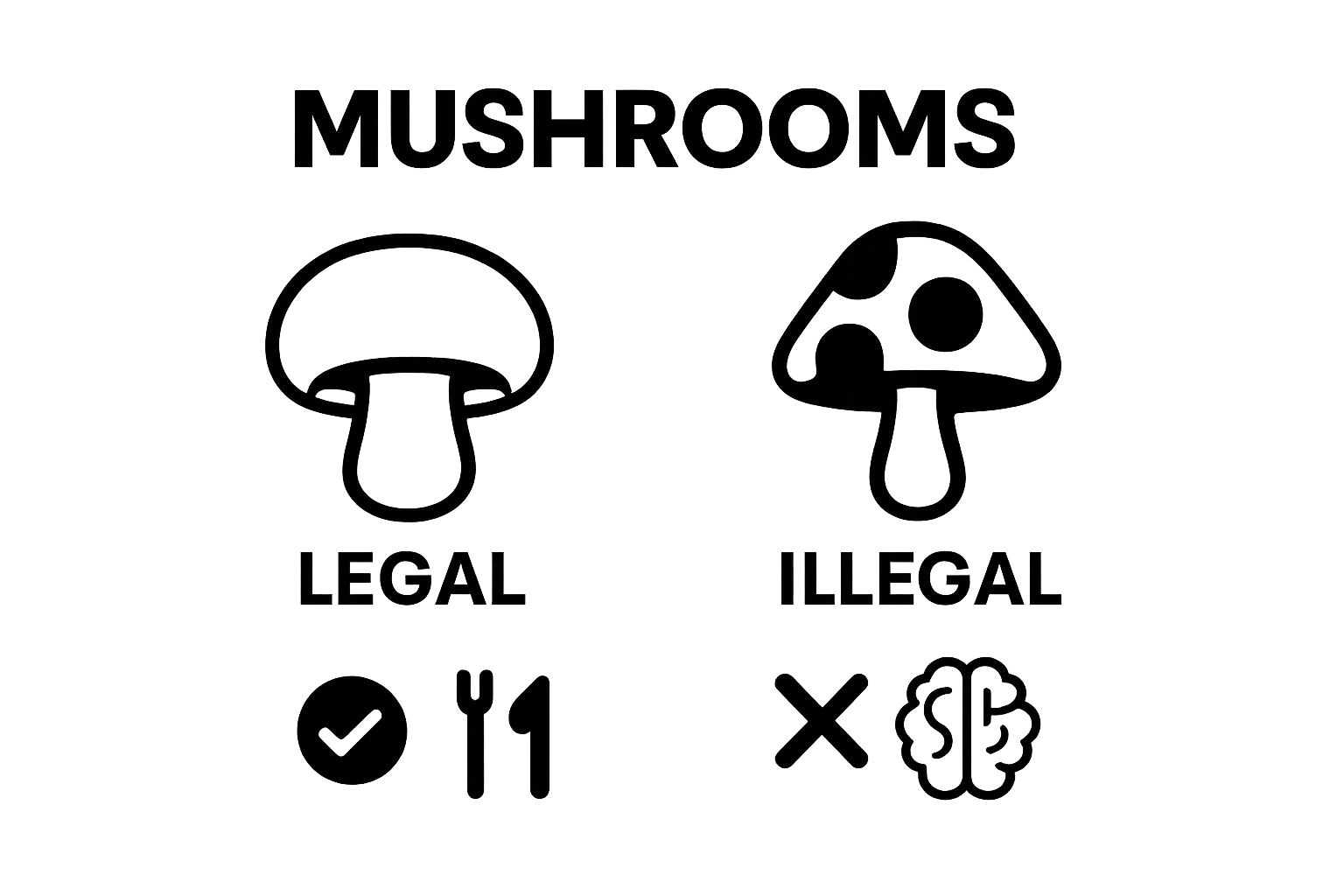
Legal mushrooms are typically categorized by their safety for human consumption and lack of psychoactive compounds. These include culinary varieties like button, shiitake, and portobello mushrooms used in everyday cooking. Research from the National Library of Medicine indicates that legality fundamentally depends on the presence or absence of controlled substances.
In contrast, illegal mushrooms primarily contain psychoactive compounds such as psilocybin, which can produce significant neurological alterations. These substances trigger hallucinogenic experiences and are strictly regulated across most jurisdictions.
 Check out our guide on understanding mushroom terminology for more detailed insights into mushroom classifications.
Regulatory Perspectives
The legal status of mushrooms varies dramatically across different regions and contexts. Key factors influencing mushroom legality include:
- Chemical composition
- Potential medical or recreational uses
- Historical cultural practices
- Current scientific research
Medical and scientific research mushrooms occupy a unique legal space. While containing controlled substances, they may receive special exemptions for authorized research purposes. This demonstrates the complex legal landscape surrounding mushroom classification, where context and intent play crucial roles in determining permissibility.
Understanding mushroom legality requires recognizing the intricate balance between potential risks, scientific potential, and societal regulations. Responsible exploration and respect for legal boundaries remain paramount when engaging with any mushroom variety.
To help clarify the fundamental legal concepts discussed, the table below compares legal and illegal mushrooms by their main characteristics and regulatory factors.
| Aspect | Legal Mushrooms | Illegal Mushrooms |
|---|---|---|
| Chemical Composition | No psychoactive compounds | Contain psychoactive substances (e.g., psilocybin) |
| Common Examples | Button, shiitake, portobello | Psilocybin (“magic”) mushrooms |
| Culinary Use | Widely used in cooking | Not permitted for culinary use |
| Health Risks | Generally safe if edible | May cause hallucinations, legal risks |
| Regulatory Status | Legal in most regions | Strictly regulated or banned in most regions |
| Use in Research | Freely researched and used | Restricted, sometimes allowed for authorized research |
| Cultural/Medical Context | Part of dietary and wellness practices | Focus of medical or therapeutic debates |
Why Mushroom Legality Matters in Wellness
Mushroomlegality significantly impacts health research, therapeutic potential, and individual wellness strategies. The complex regulatory landscape surrounding mushrooms directly influences how these powerful natural compounds can be studied, accessed, and utilized for human health.
Research and Therapeutic Innovation
Legal frameworks play a critical role in determining scientific research opportunities for mushrooms with potential wellness benefits. Research in Therapeutic Advances in Psychopharmacology demonstrates how changing legal perspectives enable clinical investigations into mushroom compounds for treating mental health conditions like depression and anxiety.
Researchers face substantial barriers when legal restrictions limit exploration of mushroom properties. These limitations can slow down critical discoveries about natural compounds that might offer breakthrough treatments. Explore our guide on understanding types of edible mushrooms to gain deeper insights into mushroom diversity and potential.
Individual Health Considerations
Mushroomlegality directly impacts personal wellness choices by determining:
- Available therapeutic options
- Research accessibility
- Medical treatment possibilities
- Potential health interventions
Understanding legal boundaries helps individuals make informed decisions about incorporating mushroom-based wellness strategies. Consumers must navigate complex regulations while seeking natural health solutions, recognizing that legal status does not always correlate with therapeutic potential.
Comprehensive wellness requires balancing scientific evidence, legal frameworks, and individual health needs. As research continues to evolve, mushroom legality will remain a crucial factor in unlocking the full potential of these remarkable natural compounds.
How Mushroom Laws Vary Around the World
Mushroomlegality represents a complex global tapestry of regulations that differ dramatically across international boundaries. Understanding these variations requires examining cultural, scientific, and legal perspectives that shape mushroom classification and usage worldwide.
Regional Legal Frameworks
Different regions approach mushroom regulation through unique lenses of cultural practice, scientific understanding, and health policy. North American jurisdictions typically maintain strict controls on psychoactive mushrooms, while some European countries demonstrate more nuanced approaches to research and potential therapeutic applications.
Certain countries have developed progressive frameworks for mushroom research and controlled usage. For instance, some jurisdictions allow limited scientific investigations into psilocybin compounds under carefully monitored conditions. Learn more about mushroom cultivation practices to understand the broader context of mushroom regulatory environments.
International Regulatory Considerations
Global mushroom laws are influenced by multiple complex factors:
- International drug control treaties
- National health regulations
- Scientific research protocols
- Cultural and traditional practices
- Emerging medical research findings
The legal status of mushrooms can change rapidly as scientific understanding evolves. Researchers and policymakers continuously reassess existing regulations based on new evidence about potential medical benefits and potential risks associated with various mushroom compounds.
This table summarizes how mushroom laws and regulations differ across regions, considering cultural, legal, and scientific perspectives as discussed in the article.
| Region/Country | Legal Approach to Psychoactive Mushrooms | Scientific Research Access | Cultural Influence |
|---|---|---|---|
| United States | Mostly illegal, strict federal control | Limited, allowed for some trials | Conservative, risk-focused |
| Canada | Illegal federally, exceptions in research | Expanding for medical studies | Growing acceptance |
| Netherlands | Tolerant of some psychoactive truffles | Permitted for certain research | More liberal, harm reduction |
| Brazil | Not formally recognized as illegal | Rare research, less regulated | Traditional/indigenous use |
| Australia | Illegal, with medical exemptions emerging | Very limited, case-by-case | Cautious, health-driven |
| Portugal | Decriminalized personal use | Some research enabled | Focus on harm reduction |
Understanding these variations requires recognizing that mushroom laws are not static but dynamic systems responsive to ongoing scientific discovery and societal perspectives. Responsible engagement with mushroom research demands continuous learning and respect for complex legal landscapes that protect public health while enabling scientific progress.
The Science Behind Medicinal and Psychoactive Mushrooms
Medicinal and psychoactive mushrooms represent complex biological systems with profound neurological interactions, offering fascinating insights into human physiology and potential therapeutic applications. Understanding their scientific foundations requires examining their unique chemical compositions and neurological mechanisms.
Chemical Composition and Neurological Interactions
Research from the National Institutes of Health reveals that psychoactive mushrooms contain specialized compounds like psilocybin, which interact directly with neural receptors to produce extraordinary neurological experiences. These compounds demonstrate remarkable potential for understanding brain chemistry and exploring alternative therapeutic interventions. Learn more about mushrooms for cognitive support to deepen your understanding of these fascinating biological mechanisms.
Therapeutic and Physiological Mechanisms
Medicinal mushrooms operate through intricate biological pathways that influence human wellness. Their potential therapeutic applications span multiple domains:
- Neurological regulation
- Immune system modulation
- Stress response management
- Cognitive function enhancement
- Metabolic balance
Scientific investigations continue to uncover the nuanced ways these remarkable fungi interact with human biological systems. Researchers are particularly interested in understanding how specific mushroom compounds can potentially address complex health challenges, moving beyond traditional pharmaceutical approaches.
The exploration of medicinal and psychoactive mushrooms represents a frontier of scientific research, challenging existing paradigms and offering unprecedented insights into human neurological and physiological potential. As scientific methodologies advance, our comprehension of these extraordinary natural compounds continues to expand, promising exciting developments in wellness and medical treatment strategies.
Future Trends in Mushroom Legislation
The landscape of mushroom legislation is rapidly evolving, driven by groundbreaking scientific research, shifting public perceptions, and emerging therapeutic applications. Global policy frameworks are experiencing transformative changes that promise to reshape how society understands and regulates mushroom compounds.
Global Policy Transformation
Research published in the International Journal of Environmental Research and Public Health indicates a significant global trend towards progressive mushroom legislation. Policymakers are increasingly recognizing the potential medical and therapeutic benefits of previously restricted mushroom compounds, particularly those with neurological and mental health applications.
Western countries are leading this legislative evolution, with several jurisdictions exploring frameworks that balance scientific research, public health considerations, and individual wellness opportunities. These emerging approaches prioritize controlled, regulated access over blanket prohibition. Explore our insights on cognitive support through mushrooms to understand the broader context of these developments.
Emerging Regulatory Considerations
Future mushroom legislation is likely to be shaped by several critical factors:
- Clinical research outcomes
- Mental health treatment potential
- Public health safety protocols
- Neurological research advancements
- Evolving societal attitudes
The trend suggests a move towards medicalization rather than criminalization. Regulatory bodies are developing nuanced approaches that distinguish between recreational use and structured, scientifically supervised therapeutic applications. This represents a profound shift from previous zero-tolerance policies to more sophisticated, evidence-based regulatory frameworks.
As scientific understanding continues to expand, mushroom legislation will likely become increasingly sophisticated, prioritizing human wellness, research integrity, and responsible access to potentially transformative natural compounds.

Ready to Navigate Mushroom Legality with Confidence?
If you’ve ever felt confused or overwhelmed by the legal landscape of mushrooms, you are not alone. The article addressed how tricky it can be to distinguish between legal and illegal mushroom varieties, what those differences mean for your wellness choices, and why understanding regulatory trends matters for anyone interested in holistic health solutions. That’s where trustworthy information and thoughtfully crafted products become essential for your journey. For more foundational knowledge and additional support, you can explore our Uncategorized Archives.
Now is the perfect time to turn education into action. At WUNDER GUMMIES, we offer carefully formulated mushroom-infused gummies and easy-to-use grow kits designed to help you enjoy the benefits of functional mushrooms safely and legally. All products are crafted with natural, vegan ingredients, and our detailed listings empower you to make confident choices based on the latest scientific and legal guidance. Experience clarity and support your wellness today—visit our homepage and discover a practical path to thriving with mushrooms.
Frequently Asked Questions
What are the key differences between legal and illegal mushrooms?
Legal mushrooms are typically safe for consumption and lack psychoactive compounds, while illegal mushrooms contain psychoactive substances such as psilocybin that can cause hallucinations.
How do legal frameworks affect mushroom research?
Legal frameworks profoundly influence research opportunities, as restrictions can limit exploration of the medicinal benefits and potential therapeutic applications of mushrooms.
Why is understanding mushroom legality important for personal wellness?
Understanding mushroom legality helps individuals make informed decisions about incorporating mushroom-based health solutions into their wellness strategies, ensuring compliance with regulations that can impact accessibility and safe usage.
What factors influence the legal status of mushrooms?
Factors influencing mushroom legality include chemical composition, potential medical or recreational uses, cultural practices, and scientific research outcomes.
Recommended
- Understanding Mushroom Terminology Explained for Health Insights – WUNDER GUMMIES
- Understanding What is Mushroom Cultivation and Its Benefits – WUNDER GUMMIES
- Understanding Types of Edible Mushrooms: The Essentials – WUNDER GUMMIES
- Understanding Why Organic Mushrooms Matter for Health – WUNDER GUMMIES
