
Uncategorized
What is Mushroom Terpene? Understanding Its Benefits

Oct
Mushroom terpenes are drawing a new spotlight in wellness and supplement science. Scientists have identified over 300 distinct terpenes produced by fungi, each shaping mushroom aroma, defense, and possible health effects in unique ways. It might sound like the kind of detail only a biochemist would care about. That is until you find out some of these wild fungal molecules could actually sway mood, help the brain deal with stress, and even influence your body’s natural defenses.
Table of Contents
- Defining Mushroom Terpenes: What Are They?
- The Role Of Terpenes In Nature And Mushrooms
- Why Mushroom Terpenes Matter For Health And Wellness
- How Mushroom Terpenes Influence Mood And Cognition
- Exploring The Applications Of Mushroom Terpenes In Supplements
Quick Summary
| Takeaway | Explanation |
|---|---|
| Mushroom terpenes are unique compounds. | They are hydrocarbon-based molecules produced by fungi, differing significantly from plant-based terpenes in structure and function. |
| Terpenes play a vital role in fungi. | These compounds aid in communication, defense mechanisms, and environmental adaptability, enhancing the survival of mushrooms. |
| Terpenes have potential health benefits. | Emerging research highlights their ability to support liver functions, mitigate oxidative stress, and modulate inflammation, potentially enhancing overall wellness. |
| They influence cognitive and emotional health. | Mushroom terpenes may affect neurotransmitter activity, supporting cognitive function and emotional regulation through complex biochemical interactions. |
| Terpenes are becoming popular in supplements. | The supplement industry is leveraging mushroom terpenes for their holistic wellness properties, creating innovative formulations for health applications. |
Defining Mushroom Terpenes: What Are They?
Mushroom terpenes represent a fascinating category of organic compounds produced by fungi, playing a critical role in their biochemical structure and interactions. Research from molecular biology studies reveals these complex molecules are secondary metabolites that contribute significantly to mushroom characteristics beyond mere structural components.
The Molecular Composition of Mushroom Terpenes
At their core, mushroom terpenes are hydrocarbon compounds composed of repeating isoprene units, creating diverse molecular structures with unique properties. Unlike plant-based terpenes, fungal terpenes exhibit remarkable structural variations that influence their biological activities.
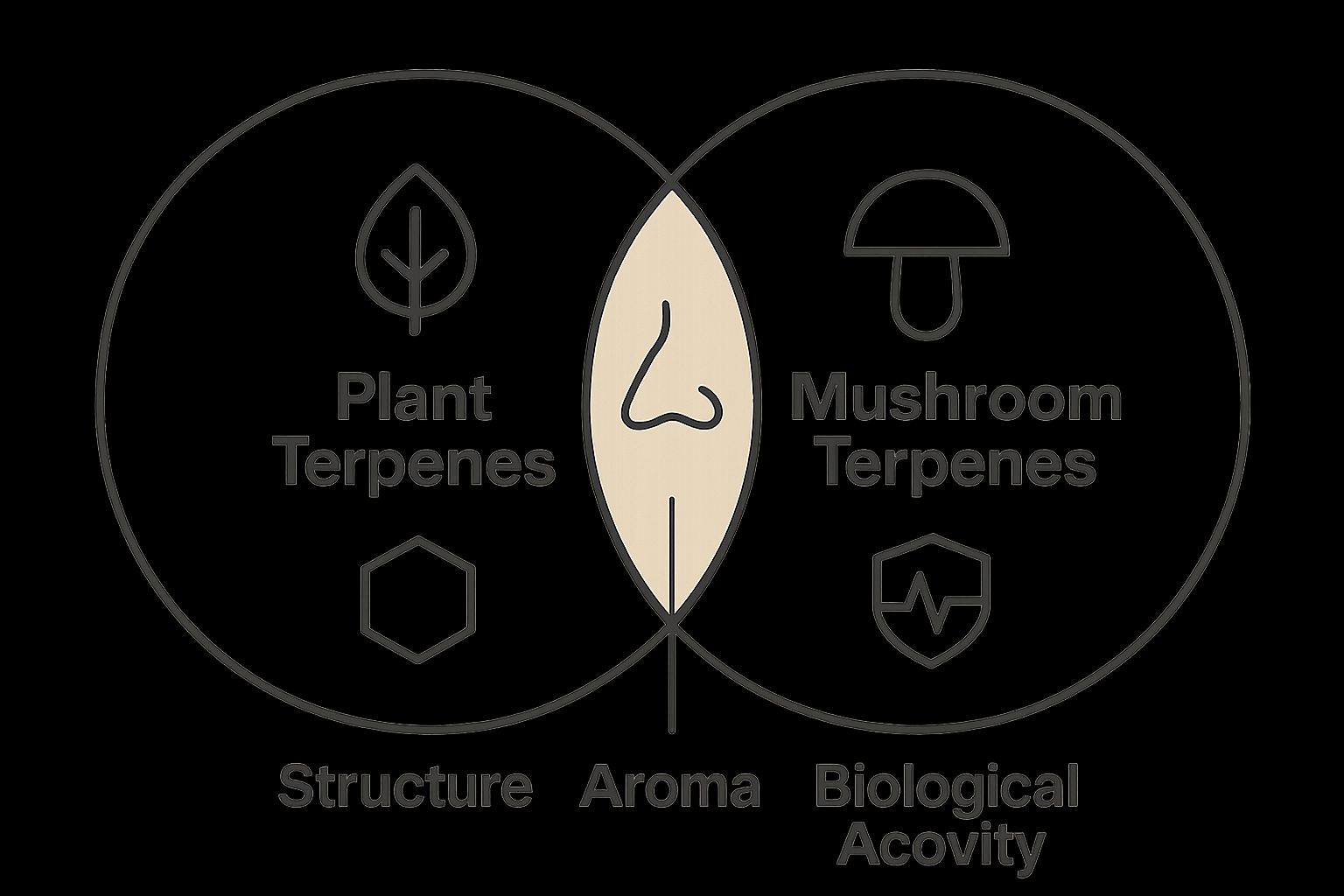 These compounds typically emerge through intricate biosynthetic pathways within fungal cells, generating molecules with potential therapeutic and ecological significance.
Key characteristics of mushroom terpenes include:
- Complex molecular configurations
- Ability to produce distinct aromatic profiles
- Potential interactions with biological systems
Functional Roles in Fungal Ecosystems
Terpenes serve multiple critical functions within mushroom biology. They act as chemical communicators, defense mechanisms, and adaptive tools that help fungi interact with their surrounding environment. Scientific investigations suggest these compounds can deter predators, attract beneficial organisms, and modulate fungal stress responses.
For those interested in diving deeper into mushroom biochemistry, our comprehensive guide on understanding mushroom compounds offers additional insights into these remarkable molecular structures.
The Role of Terpenes in Nature and Mushrooms
Terpenes function as sophisticated biochemical tools that extend far beyond simple molecular structures, serving crucial ecological and survival mechanisms in fungal environments. Research on fungal ecosystem interactions reveals these compounds play intricate roles in communication, defense, and adaptation strategies.
Ecological Communication and Defense Mechanisms
In natural ecosystems, mushroom terpenes act as complex chemical signals and protective agents. These molecular compounds enable fungi to interact with surrounding organisms, communicate environmental threats, and establish survival strategies. Terpenes help mushrooms navigate challenging ecological landscapes by:
- Repelling potential predators
- Attracting beneficial microorganisms
- Modulating competitive interactions with other species
The sophisticated chemical language of terpenes allows mushrooms to respond dynamically to environmental changes, demonstrating remarkable adaptive capabilities within intricate biological networks.
The table below summarizes the core functional roles that mushroom terpenes play within fungal ecosystems, offering a clear overview of their ecological importance.
| Functional Role | Description |
|---|---|
| Chemical Communication | Serve as signals between fungi and other organisms, enabling interaction and information exchange |
| Defense Mechanisms | Deter predators and protect against harmful microorganisms |
| Adaptive Tools | Assist in adjusting to environmental changes and stressors |
| Attraction of Allies | Attract beneficial microorganisms to support fungal growth |
| Modulation of Competition | Influence competitive interactions with other species in the ecosystem |
Biochemical Interactions and Survival Strategies
Beyond defensive functions, terpenes contribute significantly to mushroom biochemical processes. They mediate interactions between fungi and their surrounding ecosystem, influencing plant relationships, microbial communities, and broader environmental dynamics. Some terpenes exhibit antimicrobial properties, creating protective barriers against harmful microorganisms and enhancing fungal resilience.
Our guide on understanding mushroom terminology provides deeper insights into the complex world of fungal biochemistry and survival mechanisms.
Why Mushroom Terpenes Matter for Health and Wellness
Mushroom terpenes represent a promising frontier in natural health research, offering potential therapeutic benefits that extend far beyond traditional nutritional understanding. Emerging biomedical research highlights their significant potential in supporting comprehensive wellness strategies through complex biochemical interactions.
Potential Therapeutic Mechanisms
The health implications of mushroom terpenes are rooted in their remarkable molecular versatility. These compounds demonstrate nuanced interactions with human biological systems, potentially influencing critical physiological processes. Their potential wellness contributions include:
- Supporting liver metabolic functions
- Reducing oxidative stress markers
- Modulating inflammatory response pathways
- Enhancing cellular protection mechanisms
Unlike synthetic compounds, mushroom terpenes offer a holistic approach to wellness, working synergistically with the body’s natural regulatory systems.
Emerging Research and Wellness Potential
Scientific investigations continue to uncover the multifaceted health benefits associated with mushroom terpenes.
This table outlines the key health and wellness benefits currently associated with mushroom terpenes, helping readers quickly identify potential applications and supportive mechanisms.
| Health Benefit | Description |
|---|---|
| Liver Support | May aid metabolic functions and contribute to overall liver health |
| Oxidative Stress Reduction | Potential to decrease oxidative stress markers and enhance cellular protection |
| Inflammation Modulation | Could influence inflammatory response pathways, helping manage inflammation sustainably |
| Immune System Support | May assist in strengthening immune resilience and physiological defenses |
| Cognitive Function | Supports neurotransmitter modulation and may improve mental clarity and emotional stability |
| Stress Management | Offers potential mechanisms for adaptive stress response and emotional regulation |
Our comprehensive guide on full-spectrum mushroom wellness provides deeper insights into the transformative potential of natural mushroom compounds and their holistic health benefits.
How Mushroom Terpenes Influence Mood and Cognition
Mushroom terpenes represent a sophisticated biochemical mechanism for potentially modulating neurological function and emotional regulation. Preclinical neurological studies suggest these molecular compounds may interact with complex neural pathways, offering intriguing possibilities for understanding brain chemistry and emotional well-being.
Neurotransmitter Modulation Mechanisms
The interaction between mushroom terpenes and neurological systems occurs through nuanced biochemical pathways. These compounds demonstrate potential to influence neurotransmitter activity, potentially supporting brain function through subtle yet significant molecular interactions. The neurological engagement of terpenes involves:
- Potential serotonin pathway modulation
- Interactions with neural receptor sites
- Supporting neuroplasticity processes
- Potential stress response regulation
These molecular interactions suggest a complex relationship between fungal compounds and human neurological functioning, indicating sophisticated communication systems within biological networks.
Cognitive Performance and Emotional Regulation
Emergent research points to mushroom terpenes as potential contributors to cognitive resilience and emotional balance. Their molecular complexity allows for subtle yet potentially significant interactions with brain chemistry, suggesting mechanisms that could support mental clarity, emotional stability, and adaptive stress responses.
Our comprehensive guide on mushrooms for cognitive support explores the intricate connections between natural compounds and neurological wellness, providing deeper insights into this fascinating area of research.
Exploring the Applications of Mushroom Terpenes in Supplements
The supplement industry is experiencing a transformative shift with the integration of mushroom terpenes, representing a cutting-edge approach to natural wellness strategies. Scientific research in nutraceutical development highlights the growing interest in these sophisticated molecular compounds as potential game changers in nutritional supplementation.
Supplement Formulation Strategies
Manufacturers are increasingly developing innovative supplement approaches that leverage the unique properties of mushroom terpenes. These advanced formulations aim to harness the complex biochemical potential of fungal compounds through strategic extraction and concentration techniques. Key considerations in terpene-based supplement development include:
- Precise molecular extraction methods
- Maintaining compound bioavailability
- Ensuring standardized potency
- Minimizing potential degradation
The goal is to create supplements that maximize the natural potential of mushroom terpenes while maintaining their intricate molecular integrity.

Targeted Wellness Applications
Mushroom terpene supplements are being explored for diverse wellness applications, ranging from cognitive support to immune system enhancement. These sophisticated natural compounds offer potential benefits across multiple physiological systems, suggesting a holistic approach to supplementation. Researchers are particularly interested in their potential to support:
- Cognitive function and mental clarity
- Stress management mechanisms
- Immune system resilience
- Metabolic balance
Our comprehensive guide on full spectrum mushroom supplements provides deeper insights into the emerging world of advanced natural wellness strategies.
Unlock the True Power of Mushroom Terpenes with WUNDER GUMMIES
Have you ever wondered how to experience the holistic benefits of mushroom terpenes in a practical, enjoyable way? The article clearly shows a growing need for natural solutions that support mood, cognition, and overall well-being without relying on harsh, synthetic ingredients. If you are searching for convenient options that harness the advanced science of mushroom terpenes—such as improved focus, relaxation, and emotional balance—you are not alone. Many people are looking for simple, reliable ways to bring the promise of these remarkable compounds into their daily routine.

Discover the difference firsthand at WUNDER GUMMIES. Explore our selection of functional mushroom products designed to deliver the benefits of expertly balanced mushroom terpenes with delicious flavors and vegan ingredients. Our gummies and grow kits are carefully crafted to help you feel more creative, focused, or simply at ease—just as nature intended. Now is the perfect time to start your own journey with full-spectrum mushroom wellness. Visit https://wundermushroomsgummies.com and experience genuine transformation today.
Frequently Asked Questions
What are mushroom terpenes and their primary functions?
Mushroom terpenes are organic compounds produced by fungi that serve various biochemical roles, including communication and defense. To understand their significance, explore how these compounds influence fungal interactions with their environment.
How can mushroom terpenes benefit overall health and wellness?
Mushroom terpenes are believed to support various aspects of health, including liver function and inflammation regulation. Consider incorporating mushroom terpene supplements into your routine to potentially enhance your overall wellness.
In what ways do mushroom terpenes influence mood and cognition?
Mushroom terpenes may affect neurotransmitter activity and modulate stress responses, which can impact mood and cognitive function. Explore the therapeutic potential of these compounds to help improve mental clarity and emotional balance.
How are mushroom terpenes extracted for use in supplements?
Mushroom terpenes are extracted using precise methods to maintain their bioavailability and potency. If you’re interested in supplementation, focus on products that emphasize quality extraction techniques to ensure you receive effective terpenes.
What are the potential applications of mushroom terpenes in dietary supplements?
Mushroom terpenes are being researched for their potential applications in cognitive support, immune enhancement, and stress management. Consider assessing different supplements for formulations that highlight these specific benefits.
How do I choose a mushroom terpene supplement that fits my needs?
To select a suitable mushroom terpene supplement, look for those that clearly list their active compounds and provide detailed information on their benefits. Evaluate your health goals and prioritize products that align with your specific wellness objectives.
Recommended
- Understanding Mushroom Terminology Explained for Health Insights – WUNDER GUMMIES
- Understanding the Role of Compounds in Mushrooms – WUNDER GUMMIES
- What is Mushroom Flavoring? Understanding Its Benefits – WUNDER GUMMIES
- Understanding What Are Active Compounds in Mushrooms – WUNDER GUMMIES
